
Ectoedemia nyssaefoliella
(Chambers, 1880) Wilkinson et al., 1981
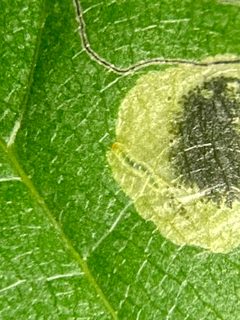
Ectoedemia nyssaefoliella is a minute in the Nepticulidae, known for its leaf-mining larvae that feed exclusively on black tupelo (Nyssa sylvatica). The has been documented in Kentucky, Ohio, and North Carolina, with two to three annually. First-generation larvae complete development in June.
Pronunciation
How to pronounce Ectoedemia nyssaefoliella: //ˌɛk.toʊ.ɪˈdɛ.mi.ə ˌnɪs.seɪ.foʊ.liˈɛl.lə//
These audio files are automatically generated. While they are not always 100% accurate, they are a good starting point.
Identification
Confirmed identification requires examination of genitalia or larval association. The combination of minute size (4.5–6 mm wingspan), geographic restriction to the southeastern United States, and exclusive association with Nyssa sylvatica leaf mines supports identification. Similar Ectoedemia occur on different host plants.
Images
Habitat
Deciduous forests and woodland edges where the plant Nyssa sylvatica (black tupelo, sour gum) grows. The is tied to the presence of this tree rather than specific structure.
Distribution
United States: Kentucky, Ohio, and North Carolina. Records indicate a Nearctic distribution limited to these three states.
Seasonality
Two or three per year. First-generation larvae reach full size in June. periods are not explicitly documented but likely span spring through late summer based on multivoltine .
Diet
Larvae feed on Nyssa sylvatica leaves, creating leaf mines. feeding habits are unknown.
Host Associations
- Nyssa sylvatica - larval Leaves are mined by larvae; this appears to be the exclusive .
Life Cycle
Multivoltine with two or three annually. Larvae mine leaves of the plant. likely occurs within the leaf mine or in soil, though specific details are not documented.
Behavior
Larvae are leaf miners, feeding between the epidermal layers of Nyssa sylvatica leaves. This creates visible serpentine or blotch mines. is poorly documented.
Ecological Role
As a herbivore, the contributes to leaf damage on Nyssa sylvatica. The ecological impact is likely minor given the tree's abundance and the 's small size, though quantitative studies are lacking.
Human Relevance
No documented economic or cultural significance. Occasionally encountered by botanists and entomologists examining Nyssa sylvatica foliage.
Similar Taxa
- Other Ectoedemia speciesMany Ectoedemia are morphologically similar and require genitalia examination or plant association for separation. E. nyssaefoliella is distinguished by its exclusive use of Nyssa sylvatica.
- Other Nepticulidae on NyssaNo other Nepticulidae are documented on Nyssa sylvatica, making association a strong indicator for this species.
More Details
Taxonomic history
Originally described as Nepticula nyssaefoliella by Chambers in 1880, transferred to Ectoedemia by Wilkinson et al. in 1981.
Collection records
iNaturalist reports 521 observations, indicating moderate documentation effort despite the ' small size and specialized .