
Ectoedemia clemensella
(Chambers, 1873) Wilkinson et al., 1979
Ectoedemia clemensella is a minute in the Nepticulidae, characterized by its extremely small size and leaf-mining larval habit. It is known from a restricted range in the eastern United States. The completes three annually and is tightly associated with American sycamore as its sole documented plant.
Pronunciation
How to pronounce Ectoedemia clemensella: /ˌɛk.toʊ.ɪˈdiː.mi.ə ˌklɛ.mənˈsɛl.ə/
These audio files are automatically generated. While they are not always 100% accurate, they are a good starting point.
Identification
The combination of minute size (wingspan under 6 mm), Nepticulidae characteristics, and occurrence on Platanus occidentalis supports identification. Definitive separation from other eastern North American Ectoedemia requires examination of genitalia or . The leaf mines on American sycamore may be indistinguishable from those of related species without rearing .
Images
Appearance
have a wingspan of 4.5–5.2 mm, placing them among the smallest Lepidoptera. Like other nepticulids, they likely exhibit reduced wing venation and simple, narrow wings with long fringes. Coloration and pattern details are not documented in available sources.
Habitat
Associated with stands of American sycamore (Platanus occidentalis), typically in riparian zones, floodplains, and moist woodland edges where this tree occurs. Specific microhabitat preferences for are undocumented.
Distribution
Documented from Pennsylvania, Kentucky, Maryland, North Carolina, and Ohio in the eastern United States. GBIF records indicate Nearctic distribution.
Seasonality
Three per year have been documented, though specific periods are not reported.
Diet
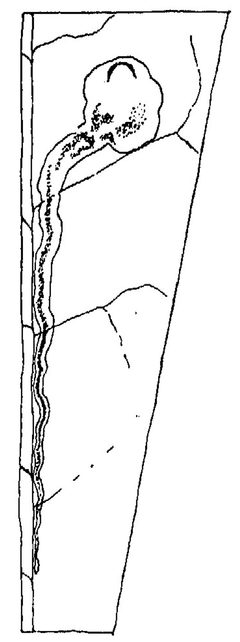
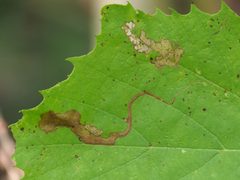
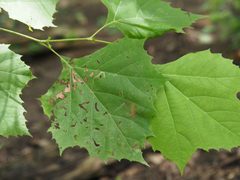
Larvae feed on leaves of Platanus occidentalis (American sycamore), creating internal leaf mines. feeding habits are unknown.
Host Associations
- Platanus occidentalis - larval larvae mine leaves
Life Cycle
Three per year. Larvae develop within leaf mines on Platanus occidentalis. likely occurs in the leaf mine or in soil/litter, though specific details are not documented.
Behavior
Larvae are leaf miners, feeding internally between leaf layers. has not been described.
Ecological Role
As a on Platanus occidentalis, larvae contribute to herbivore pressure on this tree . Their role in broader processes has not been studied.
Human Relevance
No documented economic or ecological impact. The is of interest to lepidopterists studying microlepidoptera diversity and -plant specialization.
Similar Taxa
- Other Ectoedemia speciesMany Ectoedemia are morphologically similar and require genital dissection or molecular methods for reliable identification. Several species also mine Platanus leaves.
- Stigmella species (Nepticulidae)Stigmella leaf miners on Platanus produce similar mines; size and genitalia differ.
More Details
Taxonomic history
Originally described as Nepticula clemensella by Chambers in 1873, later transferred to Ectoedemia. The combination was established by Wilkinson et al. in 1979.