
Fomoria
Beirne, 1945
Species Guides
3- Fomoria hypericella
- Fomoria pteliaeella(Wafer Ash Leafminer Moth)
- Fomoria septembrella(Hypericum Pigmy)
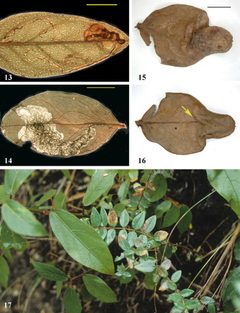
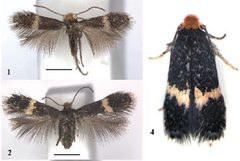
Fomoria is a of minute in the Nepticulidae, established by Beirne in 1945. These moths are part of the diverse microlepidoptera fauna. The genus has been historically treated as a subgenus within Ectoedemia in some classifications. Fomoria are found in the Northern Hemisphere with records from Europe and North America.
Pronunciation
How to pronounce Fomoria: /foʊˈmɔːriə/
These audio files are automatically generated. While they are not always 100% accurate, they are a good starting point.
Images
Distribution
Records from Denmark, Norway, and Vermont (United States). The has a Northern Hemisphere distribution with presence in Europe and North America.
Similar Taxa
- EctoedemiaFomoria has been treated as a subgenus within Ectoedemia in some taxonomic treatments; the two share -level characteristics of Nepticulidae
- StigmellaBoth are of Nepticulidae with minute size and similar overall ; separation requires examination of genitalia and wing venation
More Details
Taxonomic Status
Fomoria has been treated both as a distinct and as a subgenus of Ectoedemia. The Catalogue of Life and GBIF recognize it as a valid genus, while some systematic treatments (e.g., van Nieukerken et al.) have included it within Ectoedemia as subgenus Fomoria. This taxonomic instability reflects ongoing research in Nepticulidae .
Gondwanan Hypothesis
The Ectoedemia (Fomoria) vannifera group has been hypothesized to have a Gondwanan distribution based on systematic studies, though this remains to be substantiated with specific locality records in published literature.