
Phyllocnistis insignis
Frey & Boll, 1876
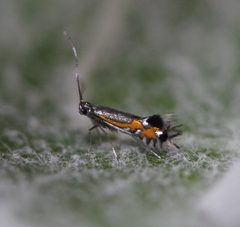
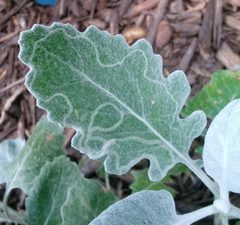
Phyllocnistis insignis is a minute in the Gracillariidae, native to North America. The is notable for its specialized larval : larvae are leaf miners that create distinctive long, narrow, winding mines on the upper surfaces of leaves. It has been documented across a broad geographic range in the United States and Canada.

Pronunciation
How to pronounce Phyllocnistis insignis: /fɪˌlɔknɪstɪs ɪnˈsɪɡnɪs/
These audio files are automatically generated. While they are not always 100% accurate, they are a good starting point.
Identification
are extremely small that require close examination or magnification for identification. The Phyllocnistis is distinguished from other Gracillariidae by larval mining and adult , but -level identification of adults often requires dissection of genitalia. Larval mines are diagnostic: long, narrow, linear, winding tracks on the upper leaf surface. Similar leaf-mining moths in Gracillariidae may be distinguished by mine pattern, plant association, and geographic range.
Images
Habitat
Associated with supporting its plants, which include woodland and forested areas where Arnoglossum muehlenbergii, Erechtites hieracifolia, Prenanthes alba, and Packera aurea occur. Specific microhabitat preferences for the stage are not documented.
Distribution
Documented throughout the United States, with records from Maine, Illinois, Ohio, Maryland, Michigan, Kentucky, Missouri, Texas, Georgia, Florida, and California. Also recorded in Canada from Alberta, Nova Scotia, and Ontario.
Diet
Larvae feed internally on leaf tissue of plants, creating mines between the epidermal layers. Known host plants are Arnoglossum muehlenbergii, Erechtites hieracifolia, Prenanthes alba, and Packera aurea. feeding habits are not documented.
Host Associations
- Arnoglossum muehlenbergii - larval plant
- Erechtites hieracifolia - larval plant
- Prenanthes alba - larval plant
- Packera aurea - larval plant
Life Cycle
Complete with , larval, pupal, and stages. Larvae are leaf miners that feed between leaf layers. Specific details on site, number of , and stage are not documented in available sources.
Behavior
Larvae create long, narrow, linear, winding mines on the upperside of leaves. The mines are epidermal, visible as pale tracks on the leaf surface. is poorly documented; like many microlepidoptera, adults are likely and may be attracted to light.
Ecological Role
As a , larvae function as herbivores that consume photosynthetic tissue. Their impact on plant has not been quantified. The may serve as prey for and other natural enemies, though specific associations are not documented.
Human Relevance
No documented economic importance. The is not known to be a pest of cultivated plants. Like many microlepidoptera, it is primarily of interest to entomologists and naturalists studying leaf-mining insects.
Similar Taxa
- Phyllocnistis citrellaSimilar leaf-mining habit in the same , but associated with citrus (Citrus spp.) and introduced to the Americas; distinguished by plant and geographic origin
- Other Phyllocnistis speciesCongeneric may be distinguished by plant association, mine , and genitalia dissection; many are poorly described
More Details
Taxonomic note
Phyllocnistis insignis was described by Frey & Boll in 1876. The Phyllocnistis is part of the Phyllocnistinae within Gracillariidae.
Observation frequency
The has over 3,200 observations on iNaturalist, suggesting it is relatively frequently encountered by citizen scientists, though identification to species level is challenging.