
Meteorinae
meteorine wasps
Genus Guides
2Meteorinae is a of braconid , though since 2015 most scientists have treated this clade as the tribe Meteorini within Euphorinae. The group is characterized by koinobiont endoparasitoid , attacking larval Coleoptera and Lepidoptera. The subfamily's name derives from the distinctive pupal stage, in which the cocoon hangs suspended from a long silk thread when parasitizing lepidopteran . Several have been employed in programs against forest and agricultural pests.
Pronunciation
How to pronounce Meteorinae: /mɛtiˈɔrɪneɪ/
These audio files are automatically generated. While they are not always 100% accurate, they are a good starting point.
Identification
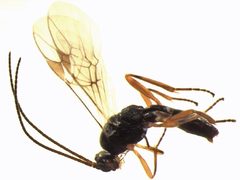
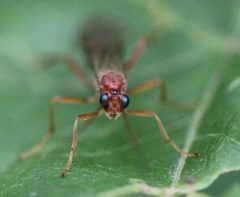
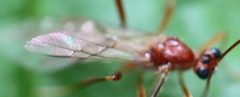
Meteorines are distinguished by wing venation: an open 1st subdiscal and a four-sided 2nd subdiscal cell on the forewings. They possess a (narrowly stalked) waist. The suspended pupal cocoon on a long silk thread is a distinctive trait for attacking Lepidoptera.
Images
Habitat
Found in where larvae occur, including forests and agricultural systems. In the Neotropics, many inhabit Andean forests above 2000 m elevation.
Distribution
Host Associations
- Coleoptera larvae - koinobiont endoparasitoid
- Lepidoptera larvae - koinobiont endoparasitoid
- Arctiinae (Lepidoptera: Erebidae) - preferring 'nasty' caterpillars
- Loxostege sticticalis - primary of Meteorus loxostegei
- Lymantria dispar (gypsy moth) - target target of introductions
- Euproctis chrysorrhoea (brown-tail moth) - target target of introductions
- Choristoneura fumiferana (spruce budworm) - investigated target of research
- Scolytinae (bark beetles) - investigated target of research
Life Cycle
Koinobiont endoparasitoids, developing within living larvae. Most are solitary, laying a single per host, though some are gregarious with multiple larvae developing within one host. occurs within a cocoon that, in lepidopteran hosts, hangs suspended from a long silk thread.
Behavior
of many are . Gregarious and solitary development strategies both occur within the . show preference for chemically defended or 'nasty' caterpillars.
Ecological Role
agents of caterpillar and larvae. Natural enemies of agricultural and forest pests including armyworms, cutworms, loopers, and bark beetles.
Human Relevance
Several used in programs. Meteorus pulchricornus imported to North America for gypsy moth control. M. vesicolor introduced to the United States in the early 1900s for brown-tail moth control. M. trachynotus investigated for spruce budworm control, and M. hypophloei for bark beetle control. Other species used against cutworms, avocado looper, and citrus swallowtail pests.
Similar Taxa
- EuphorinaeMeteorinae has been reclassified as tribe Meteorini within Euphorinae since 2015; shares koinobiont endoparasitoid but differs in wing venation and pupal cocoon structure
- Other Braconidae subfamiliesDistinguished by the combination of open 1st subdiscal , four-sided 2nd subdiscal cell, waist, and suspended pupal cocoon on silk thread
Sources and further reading
- BugGuide
- Wikipedia
- NCBI Taxonomy
- Neotropical species of Meteorus Haliday (Hymenoptera: Braconidae: Meteorinae) parasitizing Arctiinae (Lepidoptera: Noctuoidea: Erebidae)
- Taxonomic revision and morphometric analysis of Meteorus Haliday, 1835 (Hymenoptera: Braconidae: Meteorinae) from Colombia
- The Biology of the Parasites of Loxostege sticticalis, L., in North America—Meteorus loxostegei, Vier. (Braconidae, Meteorinae)