
Delphastus
Casey, 1899
whitefly destroyers
Species Guides
3- Delphastus catalinae(Whitefly Predatory Lady Beetle)
- Delphastus pallidus
- Delphastus pusillus(Whitefly Destroyer)
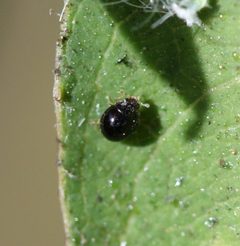
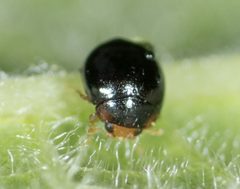
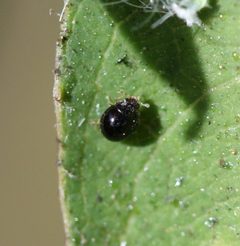
Delphastus is a of small predatory lady beetles in the Coccinellidae, tribe Serangiini. The genus contains approximately 7-20 described , with several species commercially utilized as agents of whiteflies (Hemiptera: Aleyrodidae) in agricultural and ornamental systems. Species such as D. catalinae, D. pusillus, and D. pallidus are well-documented of whitefly stages, feeding on and nymphs of multiple whitefly species including Bemisia tabaci, B. argentifolii, Trialeurodes vaporariorum, and Singhiella simplex. The genus is characterized by specialized predatory on whiteflies, with documented curves and prey preferences varying by species and whitefly life stage.
Pronunciation
How to pronounce Delphastus: //dɛlˈfæstəs//
These audio files are automatically generated. While they are not always 100% accurate, they are a good starting point.
Identification
Delphastus are small coccinellid beetles distinguished from other lady beetles by their specialized association with whitefly prey and membership in the tribe Serangiini. Species-level identification requires examination of morphological characters not consistently detailed in available sources. D. catalinae, D. pusillus, and D. pallidus have been documented as distinct species through ecological and behavioral studies, with D. pallidus specifically noted as feeding on a taxonomically diverse set of both waxy and non-waxy whitefly species.
Images
Habitat
Agricultural crop systems, greenhouses, and ornamental landscapes where whitefly prey occur. Documented include: poinsettia greenhouses (D. catalinae rearing), cotton fields, squash crops, tomato cultivars, collards, cassava fields, and Ficus hedges. The is associated with plants of whitefly prey including Ficus benjamina, F. microcarpa, kale, bean, and various ornamental and vegetable crops.
Distribution
Western Hemisphere origin; documented from North America including Florida, California, and southern U.S. states, Central and South America including Colombia and Brazil, with commercial culture and release in multiple regions. D. pallidus collected in Miami-Dade and Collier Counties, Florida. D. argentinicus recorded in Paraná State, Brazil. D. catalinae reared in northern California for release in southern California.
Diet
stages of whiteflies (Hemiptera: Aleyrodidae), specifically and nymphs. Documented prey include: Bemisia tabaci (sweetpotato whitefly), B. argentifolii (silverleaf whitefly), Trialeurodes vaporariorum (greenhouse whitefly), Singhiella simplex (ficus whitefly), Aleurothrixus trachoides (pepper/solanum whitefly), Paraleyrodes bondari (Bondar's nesting whitefly), Aleurodicus rugioperculatus ( spiraling whitefly), Aleurodicus dugesii (giant whitefly), and Asiothrixus antidesmae. D. pusillus show high consumption of whitefly eggs across all densities, while larvae show preference for nymphs over eggs.
Life Cycle
Complete with four stages: , larva (four instars), pupa, and . D. pusillus completes in approximately 29 days at 25°C: egg 6.8 days, first larval instar 3.6 days, second 2.1 days, third 2.7 days, fourth 6.8 days, pupa 7.3 days. D. catalinae development affected by relative humidity. Rearing on poinsettia plants completed in approximately 12-week cycles.
Behavior
Specialized of whitefly stages with documented curves. D. pusillus exhibits Type II functional response when feeding on whitefly nymphs. and larvae demonstrate prey stage preferences: adults consume readily while larvae prefer nymphs. speed and searching affected by leaf surface characteristics (tomentosity). Exhibits in response to prey . Intraguild interactions documented with such as Encarsia sophia.
Ecological Role
and agent of whitefly pests in agricultural and ornamental . Suppresses whitefly in cotton, vegetable crops, and ornamental landscapes. Part of natural enemy complex including such as Baeoentodon balios. Conservation of Delphastus populations recommended in programs to reduce reliance on .
Human Relevance
Commercially mass-reared and sold as agent for whitefly management in greenhouses and field crops. D. catalinae and other used in programs against Bemisia whiteflies, ficus whitefly, and other whitefly species. Production cost estimated at $0.22 per for D. catalinae. Compatibility with fungi (Cordyceps fumosorosea) and selectivity to (tolerant to pymetrozine, susceptible to thiamethoxam) relevant to .
Similar Taxa
- Nephaspis oculatusAlso a coccinellid of Bemisia argentifolii; distinguished by different searching and feeding patterns documented in comparative studies
- Other Coccinellidae (generalist lady beetles)Delphastus are specialized whitefly in tribe Serangiini, whereas most lady beetles are predators of aphids, scale insects, or other pests; ecological specialization and prey range distinguish Delphastus
Sources and further reading
- BugGuide
- Wikipedia
- GBIF taxonomy match
- iNaturalist taxon
- NCBI Taxonomy
- Delphastus pallidus Archives - Entomology Today
- Don't Bet Your Hedges: IPM Guide Outlines Ficus Whitefly Management
- collecting whitefly natural enemies - Entomology Today
- Toxicity of pymetrozine and thiamethoxam to Aphelinus gossypii and Delphastus pusillus
- REARING DELPHASTUS CATALINAE (COLEOPTERA: COCCINELLIDAE): PRACTICAL EXPERIENCE AND A MODELING ANALYSIS
- Whitefly Predatory Lady Beetle (suggested common name) Delphastus catalinae (Horn) (Insecta: Coleoptera: Coccinellidae)
- Whitefly Species Preferences of the Predatory Ladybird Beetle, Delphastus pallidus LeConte (Coleoptera: Coccinellidae)
- Efecto de la densidad de población de Trialeurodes vaporariorum (Hemiptera: Aleyrodidae) sobre la eficiencia del depredador Delphastus pusillus (Coleoptera: Coccinellidae)
- Life history and life table analysis of the whitefly predator Delphastus catalinae (Coleoptera: Coccinellidae) on collards
- First record of Delphastus argentinicus Nunenmacher (Coccinellidae: Serangiini) as a predator to whitefly in cassava crops
- Reproduction and Feeding Behavior of Delphastus pusillus (Coleoptera: Coccinellidae), a Predator of Bemisia tabaci (Homoptera: Aleyrodidae)
- Biology and Feeding Habits of Delphastus Pusillus (Coleoptera: Coccinellidae) Predator of Whiteflies
- Effects of plant and prey characteristics on the predatory behavior of Delphastus catalinae
- Intraguild interactions between an oligophagous predator, Delphastus catalinae (Coleoptera: Coccinellidae), and a parasitoid, Encarsia sophia (Hymenoptera: Aphelinidae), of Bemisia tabaci (Homoptera: Aleyrodidae)
- Effect of Density of the Whitefly Predator Delphastus Pusillus (Le Conte) (Coleoptera: Coccinellidae) On Its Searching Efficiency
- Performance of the predator Delphastus pusillus on Bemisia resistant and susceptible tomato lines
- Compatibility of the Predatory Beetle, Delphastus catalinae, with an Entomopathogenic Fungus, Cordyceps fumosorosea, for Biocontrol of Invasive Pepper Whitefly, Aleurothrixus trachoides, in Florida
- Searching and Feeding Behavior ofNephaspis oculatusandDelphastus catalinae(Coleoptera: Coccinellidae), Predators ofBemisia argentifolii(Homoptera: Aleyrodidae)