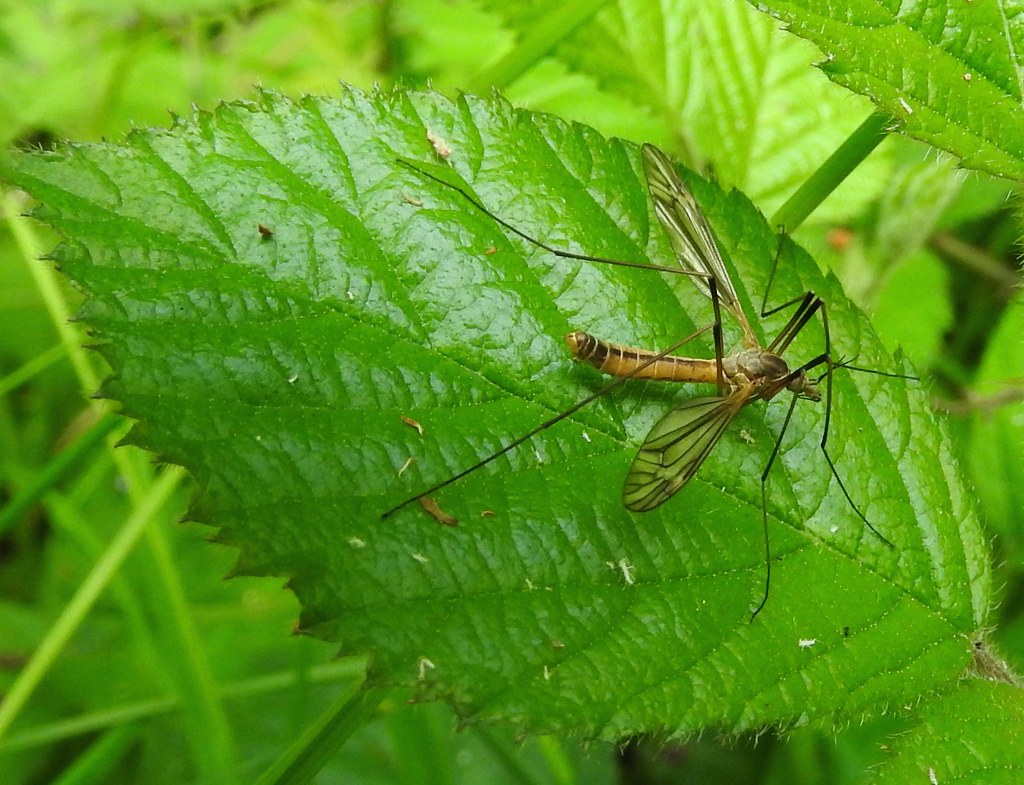
Tipula triplex is a species of crane fly in the family Tipulidae, first described by Francis Walker in 1848. It belongs to the large and diverse genus Tipula, which contains over 2,000 species worldwide. Like other crane flies, it is characterized by its elongated legs and slender body form. The species is part of the Palaearctic fauna, though specific details about its biology and ecology remain limited in available literature.
crane fly
Tipula ultima is a species of large crane fly in the family Tipulidae. It was originally described as Tipula flavescens by Fabricius in 1805, but that name was preoccupied. Charles Howard Alexander proposed the replacement name ultima in 1915. The specific epithet refers to its late-season flight period; this species flies later in the year than most other crane flies. It is found across much of Canada and the United States.
large crane fly
Tipula valida is a species of large crane fly in the family Tipulidae. It is recognized as a valid species within the genus Tipula, with two recognized subspecies: the nominate form T. v. valida and T. v. atricornis. The species has been documented across the Nearctic region with distribution records in Canada and the United States. As a member of Tipulidae, it belongs to one of the most species-rich families of Diptera, commonly known as crane flies or daddy longlegs.
Tipula vestigipennis is a crane fly species in the family Tipulidae, first described by Rennie Wilbur Doane in 1908. The species exhibits pronounced sexual dimorphism in body size, with females substantially larger than males. It is endemic to a highly restricted range in the San Francisco Bay Area of California, where it has been documented as a pest species destructive to vegetation and crops. The species belongs to the subgenus Triplicitipula.
Tipula xanthostigma is a species of crane fly in the family Tipulidae, described by Dietz in 1917. Records indicate it occurs in the Nearctic region, specifically in Colorado, USA. As with many crane flies, detailed biological information is limited.
Toxorhina is a genus of crane flies in the family Limoniidae comprising over 150 extant species across three subgenera: Ceratocheilus, Eutoxorhina, and Toxorhina. The genus is distinguished by an elongate rostrum and reduced wing venation compared to other crane flies. Members have been recorded from tropical and subtropical regions worldwide, with fossil evidence extending the stratigraphic range to the Eocene. The genus shows its highest diversity in tropical zones, particularly in the Oriental and Afrotropical regions.
Toxorhina magna is a species of limoniid crane fly found in eastern North America. Adults are characterized by yellowish-brown coloration, which distinguishes them from the grayish congener Toxorhina muliebris. The species has been documented from the Atlantic coast west to Michigan and south to Florida. Like other crane flies, it belongs to a group of delicate, long-legged flies whose larvae typically develop in moist soil or decaying organic matter.
Winter Gnat, Winter Crane Fly
Trichocera annulata, commonly known as the winter gnat, is a species of winter crane fly in the family Trichoceridae. First described by Johann Wilhelm Meigen in 1818, it is one of the few insects regularly active in adult form during winter months. The species has a broad distribution across Europe and North America, with introduced populations in New Zealand.
Tricyphona auripennis is a species of crane fly in the family Pediciidae, first described by Osten Sacken in 1860. It is a Nearctic species with documented records from eastern Canada and the northeastern United States. The species belongs to a genus of small to medium-sized crane flies characterized by distinctive wing venation patterns. Very few observations of this species have been recorded, with only two observations documented on iNaturalist as of the knowledge cutoff.
Tricyphona gigantea is a species of crane fly in the family Pediciidae, described by Alexander in 1940. It is known from limited distribution records in the southeastern United States, specifically Tennessee and North Carolina. The genus Tricyphona is characterized by distinctive wing venation patterns and elongated body forms typical of Pediciidae.
Ula elegans is a species of crane fly in the family Pediciidae, first described by Osten Sacken in 1869. It is a Nearctic species found across northern and western North America. As a member of the Pediciidae, it belongs to a family of delicate, long-legged flies often associated with moist habitats.
Ulomorpha is a genus of crane flies in the family Limoniidae, first described by Osten Sacken in 1869. The genus contains ten described species distributed across North America and East Asia. Members are characterized by distinctive wing venation and body setation patterns typical of the subfamily Limnophilinae.