
Trichocera annulata
Meigen, 1818
Winter Gnat, Winter Crane Fly
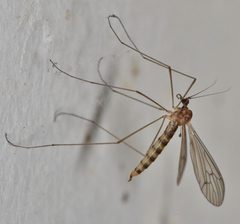
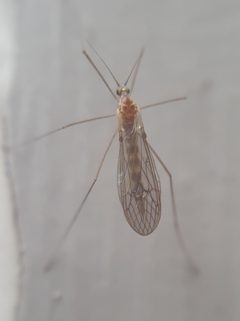
Trichocera annulata, commonly known as the winter gnat, is a of winter crane fly in the Trichoceridae. First described by Johann Wilhelm Meigen in 1818, it is one of the few insects regularly active in form during winter months. The species has a broad distribution across Europe and North America, with introduced in New Zealand.
Pronunciation
How to pronounce Trichocera annulata: //ˌtraɪ.kəˈsɪə.rə ˌæn.jʊˈleɪ.tə//
These audio files are automatically generated. While they are not always 100% accurate, they are a good starting point.
Identification
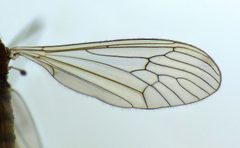
Winter crane flies are distinguished from other crane flies by three ocelli (simple ) on the crown of the between the , a feature other crane flies lack. Trichocera annulata is relatively small, averaging around 6 millimeters in body length. Wing venation patterns help separate trichocerids from other crane fly and can aid in identifying the three North American .
Images
Habitat
Associated with dark, sheltered situations including mouths of caves and mine shafts, hollow trees, and cellars. This preference likely reflects the larval affinity for decaying organic matter.
Distribution
Native to Europe and North America; in North America occurs from Alaska south to California and in Newfoundland. Introduced and established in New Zealand.
Seasonality
are active during winter months, one of the few insects regularly seen in adult form during this season. Males can be observed flying in swarms on sunny winter days.
Life Cycle
Larvae are scavengers found in decomposing leaves and vegetables, fungi, manure, decaying tubers in root cellars, and rodent burrows where they likely feed on . occurs in the larval or pupal stage, with emerging during cold months.
Behavior
Males engage in swarming on sunny winter days. are attracted to artificial light sources at night.
Ecological Role
Decomposer; larvae break down decaying organic matter including leaf litter, vegetable matter, fungi, and animal waste, contributing to nutrient cycling in .
Human Relevance
Occasionally considered a minor pest when larvae infest stored tubers in root cellars. Otherwise of no economic importance.
Similar Taxa
- Trichocera speciesOther members of the same share similar winter activity patterns and preferences; identification to level requires examination of genitalia or detailed wing venation
- Other crane flies (Tipulidae, etc.)Lack the three ocelli characteristic of Trichoceridae; also typically active during warmer months rather than winter