
Trichocera
Meigen, 1803
winter crane flies
Species Guides
4- Trichocera annulata(Winter Gnat)
- Trichocera bimacula(winter crane fly)
- Trichocera garretti(winter crane fly)
- Trichocera salmani(Winter crane fly)
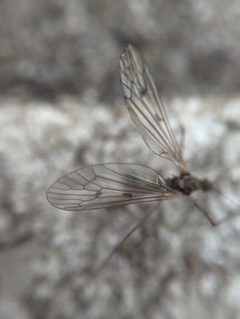
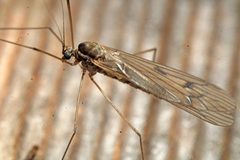
Trichocera is a of winter crane flies comprising over 140 described . are among the few insects regularly active during winter months, often appearing at porch lights or forming aerial swarms on sunny days. The genus is distinguished from other crane flies by the presence of three ocelli on the crown of the . Most North American species belong to this genus, with larvae developing in decaying organic matter including leaf litter, compost, fungi, and manure.
Pronunciation
How to pronounce Trichocera: //ˌtraɪˈkɒsərə//
These audio files are automatically generated. While they are not always 100% accurate, they are a good starting point.
Identification
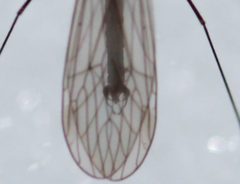
Distinguished from other crane fly (Tipulidae, etc.) by presence of three ocelli on crown between —other crane flies lack ocelli entirely. Wing venation provides additional separation. Among trichocerids, Trichocera is the most -rich in North America (27 species), distinguished from Paracladura and Diazosma by subtle morphological characters including details of wing venation and male genitalia. Field identification to species is difficult and typically requires microscopic examination.
Images
Habitat
associated with dark, sheltered situations: mouths of caves and mine shafts, hollow trees, cellars, and other protected microhabitats. Larvae occur in decomposing leaves and vegetables, fungi, manure, decaying tubers in root cellars, rodent burrows, compost, and sewage systems. Some inhabit natural caves with stable temperatures.
Distribution
Holarctic distribution: native range extends from Arctic regions through Mediterranean zone (including Azores, Canary Islands) to Far East (Kuril Islands). Introduced established on Kerguelen Islands, King George Island (Maritime Antarctica), and recently detected in southern Chile (Puerto Williams, Punta Arenas). In North America, most occur in Trichocera with highest diversity in western regions.
Seasonality
active primarily during winter months, with peak activity on sunny days when males form aerial swarms. Some observed year-round in stable-temperature such as sewage systems. Larval development occurs during coldest months, with in some delaying adult until autumn.
Diet
Larvae are scavengers on decaying organic matter: rotting vegetables, leaf litter, fungi, animal droppings (including guano), compost, and sewage waste. At least one passively absorbs coprosterols from human excrement. do not feed or feeding habits unreported.
Life Cycle
Complete with four stages: , larva, pupa, . In at least one (T. maculipennis), laboratory rearing at -1°C yields: egg stage 5–6 days, larval stage ~25 days, pupal stage 7 days, adult lifespan ~14 days; total cycle approximately 40 days under stable cold conditions. In natural , cycle extends from several months to one year. Larval development typically occurs through winter; some species enter in spring with adult delayed until autumn. All life stages vulnerable to desiccation and temperature extremes (lethal below -10°C or above 32°C).
Behavior
Males of many form aerial swarms on sunny winter days for mating. In at least one species (T. maculipennis), males can mate on substrate surface without prior aerial swarming—an to dark, confined . attracted to artificial light at night. Larvae can raise anal end with above liquid surfaces using four anal lobes that adhere to cover spiracles when necessary. Adults in at least one species do not fly when escaped from confined habitats, remaining on ground or snow. Adults of at least one species most active at night.
Ecological Role
Larvae function as decomposers and , breaking down decaying organic matter in soil, compost, and other substrates. As one of few macro-arthropods active in winter, contributes to year-round nutrient cycling in temperate and cold-climate . Some are in fragile ecosystems (Antarctica, sub-Antarctic islands), where they may alter simple structures with limited competition.
Human Relevance
Generally of no economic importance. Some are inadvertent inhabitants of human structures: root cellars (where larvae may damage stored tubers), compost heaps, sewage systems of scientific stations, and cellars. One species (T. maculipennis) has become in Antarctica and southern South America through human-mediated transport, prompting biosecurity concerns. Mechanical transmission of human viruses has been evaluated but deemed limited under studied conditions.
Similar Taxa
- Tipulidae (true crane flies)Larger body size, lack ocelli entirely, different wing venation, primarily spring-to-autumn activity rather than winter.
- ParacladuraOther trichocerid with one North American ; distinguished by subtle wing venation and genitalic characters, restricted to western North America.
- DiazosmaOther trichocerid with one transcontinental North American ; distinguished by morphological details requiring microscopic examination.
More Details
Invasive potential
T. maculipennis demonstrates significant capacity: established on King George Island (Antarctica) by 2006, spread >20 km across glacier barriers within 10 years, and recently detected in southern Chile (2022–2023). Adaptations enabling invasion include ability to survive complete darkness, substrate-surface mating without , and larval of semi-liquid food in sewage systems.
Cold adaptation
The exhibits exceptional cold , with development continuing at sub-freezing temperatures. Laboratory studies show completion at -1°C, and field observations document larval activity in frozen substrates.
Sources and further reading
- BugGuide
- Wikipedia
- iNaturalist taxon
- NCBI Taxonomy
- Catalogue of Life
- Bug Eric: Compost Insects
- Bug Eric: Winter Crane Flies
- Trichocera maculipennis (Diptera)—an invasive species in Maritime Antarctica
- ON THE LIFE HISTORY OF TRICHOCERA SALTATOR (HARRIS) (DIPTERA, TRICHOCERIDAE)
- Molecular identification of Trichocera maculipennis, an invasive fly species in the Maritime Antarctic
- Table 1: Duration of life stages of Trichocera maculipennis in the laboratory (days, temperature stable at −1 °C) and outside, in synanthropic habitat (distillery tanks; indicated are only the months when the specimens were noticed).
- Detection of human enteric viral genes in a non-native winter crane fly, Trichocera maculipennis (Diptera) in the sewage treatment facilities in Antarctic stations
- When ice and sea are not barriers for flies: First report of Trichocera maculipennis ( Diptera ) in South America
- Detection of human enteric viral genes in a non-native winter crane fly, Trichocera maculipennis (Diptera) in the sewage treatment facilities at Antarctic stations