
Trichocera bimacula
Walker, 1848
winter crane fly
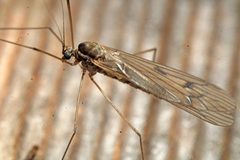
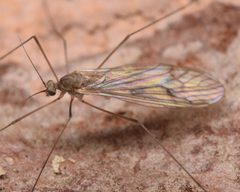
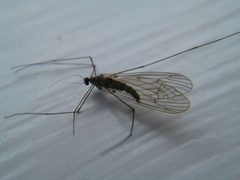
Trichocera bimacula is a of winter crane fly in the Trichoceridae. The Trichocera comprises slender, long-legged flies that are active during cold months. Larvae are scavengers on decaying organic matter including leaves, vegetables, , fungi, and material in rodent burrows.
Pronunciation
How to pronounce Trichocera bimacula: /ˌtrɪkoʊˈsɪərə baɪˈmækjʊlə/
These audio files are automatically generated. While they are not always 100% accurate, they are a good starting point.
Identification
Winter crane flies in the Trichocera can be distinguished from other small flies by their elongated, slender bodies and exceptionally long legs. The "bimacula" refers to two spots, likely on the wings, though this feature requires confirmation for reliable field identification. They are larger than the minute black scavenger flies (Scatopsidae) and dark-winged fungus gnats (Sciaridae) with which they may co-occur in compost .
Images
Habitat
Larval includes decaying leaves, compost, , fungi, and rodent burrows. are associated with these environments and have been observed on compost piles.
Distribution
Recorded from Vermont, USA, and other locations in the United States. The is widespread in North America.
Seasonality
Active during winter months; emerge and are observed during cold seasons when most other insect activity has declined.
Diet
Larvae are scavengers on decaying leaves, vegetables, , fungi, and material found in rodent burrows.
Ecological Role
Decomposer; larvae break down decaying organic matter in compost and soil , contributing to nutrient cycling.
Human Relevance
Generally beneficial in compost systems. A few Trichocera are minor pests of stored tubers in root cellars, though specific records for T. bimacula are not confirmed.
Similar Taxa
- Trichocera spp.Other winter crane flies in the same share the slender body and long-legged appearance; specific identification to level requires examination of wing spotting patterns.
- Sciaridae (dark-winged fungus gnats)Similar small size and association with decaying matter, but fungus gnats are smaller on average and have different wing venation and shorter legs relative to body size.
- Scatopsidae (minute black scavenger flies)Co-occur in compost but are much smaller (2-3 mm body length) with compact bodies rather than elongated, slender forms.
More Details
Larval feeding habits
Based on observations of the Trichocera, larvae of T. bimacula likely feed on a broad range of decaying organic materials. Some Trichocera larvae have been documented as pests of stored tubers, though this economic impact appears limited to specific circumstances.
Sources and further reading
- BugGuide
- Wikipedia
- GBIF taxonomy match
- iNaturalist taxon
- NCBI Taxonomy
- Catalogue of Life
- Bug Eric: Compost Insects
- Home invaders III - Fall field cricket, Gryllus pennsylvanicus — Bug of the Week
- Bug Eric: Fly Day Friday: Biting Midges, No-See-Ums, Punkies
- What’s all this chirping about? Ask the fall field cricket, Gryllus pennsylvanicus — Bug of the Week
- The troubadour downstairs – fall field cricket, Gryllus pennsylvanicus — Bug of the Week
- Field crickets invade a home with a wake-up call: Fall field cricket, Gryllus pennsylvanicus — Bug of the Week