
Scatopsidae
Minute Black Scavenger Flies, Dung Midges
Subfamily Guides
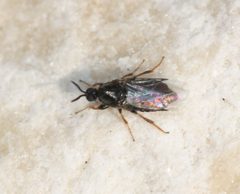
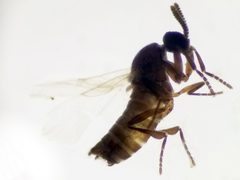
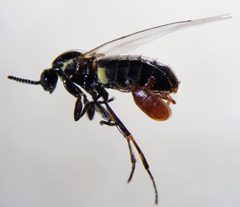
4, commonly known as or " ," is a small of nematoceran flies in the order Diptera. The family contains approximately 250 described across 27 , though many species remain undescribed. Members are typically small to minute (0.6–5 mm), dark-colored flies that bear superficial resemblance to black flies (Simuliidae) but generally lack the characteristic humped of that family. They have a worldwide distribution.
Pronunciation
How to pronounce Scatopsidae: //ˌskætəpˈsaɪdiː//
These audio files are automatically generated. While they are not always 100% accurate, they are a good starting point.
Identification
Distinguished from the similar-looking black flies (Simuliidae) by the generally absent or reduced humped . Extremely small size (2–3 mm in common like Coboldia fuscipes) and dark coloration are characteristic. Final identification to species level requires microscopic examination.
Images
Appearance
Small to minute flies ranging from 0.6 to 5 mm in body length. Generally dark-colored, predominantly black. Body form similar to black flies (Simuliidae) but typically lacking the pronounced humped characteristic of Simuliidae. Wings present in ; newly emerged adults have wings in a state that inflate to full size shortly after .
Habitat
Decomposing organic matter including compost heaps, decaying fungal tissue, and rotting plant and animal material. Larval includes mycelia of mushrooms and decaying organic substrates. may be found on surfaces of compost piles and enclosure walls.
Distribution
Worldwide distribution. Recorded from Finland and the Palaearctic region ( Aspistes), Denmark, Norway, Sweden, and North America (Illinois/Missouri area).
Diet
Larvae feed on mycelia of mushrooms and decaying fungal, plant, or animal tissue. feeding habits not documented in available sources.
Life Cycle
Complete with , larva, pupa, and stages. Adults emerge from pupal stage with wings initially in state, requiring inflation to full size. Specific details on egg-laying sites and pupal not documented.
Behavior
have been observed on surfaces of compost piles and enclosure walls. Newly emerged adults remain near site while wings inflate.
Ecological Role
Decomposers (saprophytes) that contribute to breakdown of decaying organic matter into nutrient-rich material. Larval feeding on fungal mycelia and decaying tissues plays a role in nutrient cycling in decomposer .
Human Relevance
Beneficial in composting systems as indicators of healthy decomposition processes. Not known to be pests or .
Similar Taxa
- SimuliidaeSimilar small, dark body form, but distinguished by 's lack of humped
- DrosophilidaeSimilar small size and presence in compost/fermenting environments, but distinguished by different body shape and association with fruit/fermenting matter rather than fungal/decaying tissue
- SciaridaeSimilar small size and dark coloration; dark-winged fungus gnats overlap in but lack the distinctive wing venation and are slightly smaller on average
More Details
Taxonomic diversity
contains approximately 250 described in 27 , with many species awaiting description and discovery.
Compost indicator value
Presence in compost heaps indicates a healthy mini- with active decomposition processes.