
Psectrosciarinae
Genus Guides
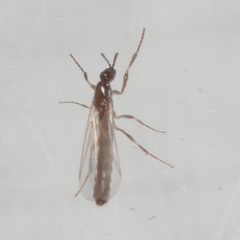
2Psectrosciarinae is a of minute black scavenger flies within the Scatopsidae (order Diptera). These small, dark-colored flies are poorly studied compared to other scatopsid groups, with limited biological and ecological documentation available. The subfamily is distinguished from the nominate subfamily Scatopsinae primarily by subtle morphological differences in wing venation and genitalic structures. Most are associated with decaying organic matter and moist microhabitats.
Pronunciation
How to pronounce Psectrosciarinae: /ˌsɛktroʊˈskaɪərəˌni/
These audio files are automatically generated. While they are not always 100% accurate, they are a good starting point.
Identification
Distinguished from Scatopsinae by reduced wing venation with fewer crossveins, particularly the absence or reduction of the r-m crossvein; male genitalia with distinctive gonostylar structure; generally smaller body size and more slender habitus than many Scatopsinae. with 12 flagellomeres. Wing often with reduced patterning compared to related .
Images
Habitat
Moist, decaying organic substrates including rotting wood, leaf litter, compost, and ; often found in shaded, humid microhabitats in forested environments.
Distribution
Documented from the Holarctic region with records from North America and Europe; distribution likely broader but undersampled due to small size and cryptic habits.
Ecological Role
Decomposers; larvae develop in decaying organic matter where they contribute to nutrient cycling. are not known to feed extensively and likely have minimal ecological impact beyond and larval development in detrital .
Similar Taxa
- ScatopsinaeLarger within Scatopsidae with more complex wing venation including well-developed r-m crossvein; generally more robust body form and often with patterned wings.
- AspistinaeAnother scatopsid distinguished by reduced palpi and different antennal structure; Aspistinae also shows reduced wing venation but differs in details of male terminalia.
More Details
Taxonomic history
The has been subject to revision, with some authors treating Psectrosciarinae as a tribe within Scatopsinae. Current classification follows recognition at subfamily rank based on consistent morphological synapomorphies in and larval characters.
Research status
The remains taxonomically challenging due to small size, difficulty in field identification, and limited larval descriptions. Most are known from specimens only.