
Psectrosciara
Kieffer, 1911
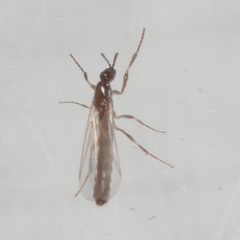
Psectrosciara is a of minute black scavenger flies in the Scatopsidae, established by Kieffer in 1911. Members of this genus are placed in the Psectrosciarinae. The genus is characterized by morphological features of the and wing venation that distinguish it from other scatopsid genera. Like other Scatopsidae, are small, dark-colored flies commonly found in moist, decaying organic matter.
Pronunciation
How to pronounce Psectrosciara: /pˌsɛktɹoʊˈʃiɑrə/
These audio files are automatically generated. While they are not always 100% accurate, they are a good starting point.
Identification
Psectrosciara can be distinguished from other Scatopsidae by features of the , including the number and arrangement of flagellomeres, and details of wing venation such as the reduction or fusion of certain . The Psectrosciarinae, which contains this genus, is characterized by specific antennal and genitalic structures that separate it from the nominate subfamily Scatopsinae. Identification to species level requires examination of male terminalia and other fine morphological details.
Images
Habitat
in this are associated with moist, decaying organic substrates including rotting wood, leaf litter, compost, and . Larval development occurs in these decomposing materials.
Life Cycle
Complete with , larval, pupal, and stages. Larvae develop in decaying organic matter.
Ecological Role
Larvae function as decomposers in decaying organic matter, contributing to nutrient cycling in forest floor and other moist terrestrial .
Similar Taxa
- ScatopseAnother in Scatopsidae; differs in antennal structure and wing venation details, and is placed in Scatopsinae rather than Psectrosciarinae.
- CoboldiaLarger in Scatopsidae with different antennal and ecological preferences; often associated with different decay substrates.
- SwammerdamellaRelated in Psectrosciarinae; separation requires detailed examination of male genitalia and antennal flagellomere structure.
More Details
Taxonomic history
The was established by Jean-Jacques Kieffer in 1911. The Psectrosciarinae was erected to accommodate this and related genera based on distinctive morphological characteristics, particularly of the and male genitalia.
iNaturalist observations
As of the data source, the has 35 observations on iNaturalist, indicating it is infrequently encountered or underreported by citizen scientists, consistent with the small size and cryptic habits of these flies.