
Coboldia
Melander, 1916
minute black scavenger flies
Species Guides
1- Coboldia fuscipes(minute black scavenger fly)
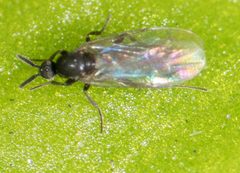
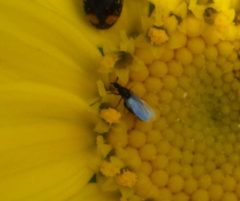
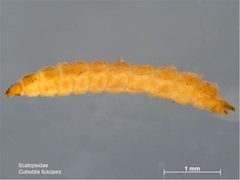
Coboldia is a of minute black scavenger flies in the Scatopsidae, established by Melander in 1916. The genus is best known from Coboldia fuscipes, a small fly 2–3 mm in body length associated with decomposing organic matter and fungal substrates. in this genus occur in the Palearctic region and have been documented in Scandinavia (Denmark, Norway, Sweden) and Korea, where C. fuscipes is a recognized pest of oyster mushroom .
Pronunciation
How to pronounce Coboldia: /koʊˈboʊldiə/
These audio files are automatically generated. While they are not always 100% accurate, they are a good starting point.
Identification
Members of Coboldia can be mistaken for other small flies of similar size, including dark-winged fungus gnats (Sciaridae) and moth flies (Psychodidae). Coboldia are distinguished from these by -level characters of Scatopsidae: typically reduced wing venation, compact body form, and antennal structure. Specific identification to requires examination of morphological details including antennal patterns.
Images
Habitat
Associated with decomposing organic matter, particularly compost and decaying fungal material. Coboldia fuscipes breeds in the spawn of cultivated oyster mushrooms (Pleurotus ostreatus) and has been observed on compost heaps with decaying plant and fungal tissue.
Distribution
Palearctic region. Documented from Denmark, Norway, and Sweden based on distribution records. Coboldia fuscipes specifically recorded from Korea in association with oyster mushroom .
Diet
Larvae feed in the mycelia of mushrooms and on decaying fungal, plant, or animal tissue. Specific feeding habits are not documented.
Host Associations
- Pleurotus ostreatus - larval oyster mushroom; larvae feed in spawn and cause serious damage to
Life Cycle
Complete : , larva, pupa, . In C. fuscipes, eggs are laid in masses on mushroom spawn. Developmental zero temperatures range from 8.8–11.6°C across life stages. Required heat units: 38 for eggs, 180 for larvae, 66–67 for pupae. Total pre- requires approximately 277–283 degree-days. Average : 282 eggs per female.
Behavior
have been observed emerging from pupal cases with wings initially in state, requiring time for full inflation. Adults are active on surfaces of compost piles and mushroom substrates.
Ecological Role
Decomposer in natural , breaking down decaying organic matter. In agricultural contexts, C. fuscipes acts as a pest of cultivated oyster mushrooms, causing serious economic damage to Pleurotus ostreatus production.
Human Relevance
Coboldia fuscipes is an agricultural pest of oyster mushroom in Korea, requiring management in commercial mushroom production. The is otherwise not known to impact human activities.
Similar Taxa
- Sciaridae (dark-winged fungus gnats)similar small size (2–3 mm) and association with fungi and decaying matter; distinguished by wing venation and antennal structure
- Psychodidae (moth flies)similar small size and presence in moist, decaying environments; distinguished by body shape and wing hairiness
- Drosophilidae (pomace flies)similar size and attraction to fermenting/decaying matter; distinguished by more prominent wing venation and different antennal structure
More Details
Agricultural significance
Coboldia fuscipes is specifically known as the 'oyster mushroom fly' due to its economic impact on Pleurotus ostreatus . Laboratory studies have established precise thermal requirements for development to aid in pest management timing.
Sensory morphology
Detailed studies of antennal in C. fuscipes have been conducted to understand the sensory of this mushroom-associated fly.
Sources and further reading
- BugGuide
- Wikipedia
- GBIF taxonomy match
- iNaturalist taxon
- NCBI Taxonomy
- Catalogue of Life
- Bug Eric: Compost Insects
- Developmental and life history characteristics of the oyster mushroom fly, Coboldia fuscipes (Diptera: Scatopsidae).
- Morphology, distribution and abundance of antennal sensilla of the oyster mushroom fly, Coboldia fuscipes (Meigen) (Diptera: Scatopsidae)