
Trichocera salmani
Alexander, 1927
Winter crane fly
Trichocera salmani is a of in the Trichoceridae. Like other members of this family, are active during cold months when few other insects fly. The species was described by Alexander in 1927 and has been recorded from Vermont and other parts of the United States.
Pronunciation
How to pronounce Trichocera salmani: /ˌtrɪkəˈsɛrə ˈsælməni/
These audio files are automatically generated. While they are not always 100% accurate, they are a good starting point.
Identification
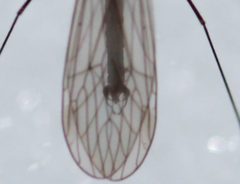
Winter crane flies (Trichoceridae) can be distinguished from other crane flies by the presence of three ocelli (simple ) on the crown of the between the , a feature other crane flies lack. They are relatively small, averaging about 6 mm in body length. Wing venation patterns also help separate trichocerids from other crane fly and can assist in identifying the three North American . Males of Trichocera can be observed flying in swarms on sunny winter days.
Images
Habitat
Associated with dark, sheltered situations including the mouths of caves and mine shafts, hollow trees, and cellars. These may reflect the larval requirement for decaying organic matter.
Distribution
United States; recorded from Vermont.
Seasonality
active in winter months. Males fly in swarms on sunny days during this period.
Behavior
Males form flying swarms on sunny winter days. appear to be associated primarily with dark, sheltered microhabitats.
Ecological Role
Larvae function as decomposers (saprophytes), breaking down decaying organic matter.
Similar Taxa
- Other crane flies (Tipulidae and related families)Lack the three ocelli characteristic of Trichoceridae; also typically active in warmer months rather than winter
- Paracladura and Diazosma (other Trichoceridae genera)Can be distinguished by wing venation patterns; Paracladura is restricted to western North America, Diazosma is transcontinental
More Details
Taxonomic note
Catalogue of Life lists this as a synonym, while GBIF treats it as accepted. This discrepancy suggests taxonomic uncertainty that may require further verification.
Genus-level biology
The Trichocera contains 27 of the approximately 29 North American trichocerid . Larvae of Trichocera species in general have been found in decomposing leaves and vegetables, fungi, manure, decaying tubers in root cellars, and rodent burrows where they likely scavenge on . A few species are minor pests of stored tubers.