
Tipula vestigipennis
Doane, 1908
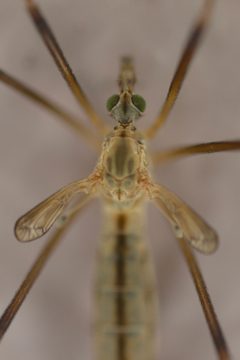
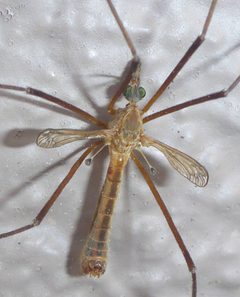
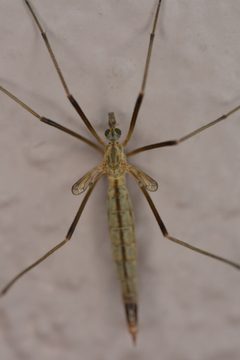
Tipula vestigipennis is a crane fly in the Tipulidae, first described by Rennie Wilbur Doane in 1908. The species exhibits pronounced in body size, with females substantially larger than males. It is to a highly restricted range in the San Francisco Bay Area of California, where it has been documented as a pest species destructive to vegetation and crops. The species belongs to the subgenus Triplicitipula.
Pronunciation
How to pronounce Tipula vestigipennis: /tɪˈpuːlə vɛˌstɪdʒɪˈpɛnɪs/
These audio files are automatically generated. While they are not always 100% accurate, they are a good starting point.
Identification
Distinguished from similar Tipula by the distinctive male genitalia: eighth sternite with broad shallow incision filled with light bearing two crossing tufts of light yellow hairs, and sub-triangular chitinized plates on lateral margins. The specific pattern of yellow and brown striping on the , with seventh and eighth segments often almost entirely dark, provides additional diagnostic characters. The restricted geographic range (San Francisco and San Mateo counties only) is a strong indicator for identification.
Images
Distribution
to San Francisco County and San Mateo County, California, USA. No records from other localities are known.
Ecological Role
Considered a pest destructive to vegetation and crops, based on its classification within subgenus Triplicitipula.
Human Relevance
Documented as a pest with potential for damage to vegetation and agricultural crops. No other documented human interactions.
Similar Taxa
- Other Triplicitipula speciesShare subgeneric classification and similar pest status; distinguished by male genitalia and specific color pattern details
- Tipula species in western North AmericaOverlap in general and geographic region; T. vestigipennis distinguished by its highly restricted range and distinctive male terminalia structure
More Details
Taxonomic history
First described by Rennie Wilbur Doane in 1908 in the journal Psyche. The name 'vestigipennis' refers to reduced or wing characteristics relative to body size, particularly notable in the relatively short wings of females.
Conservation status implications
Extremely restricted range (two counties only) suggests potential vulnerability to loss and urbanization in the San Francisco Bay Area, though no formal conservation assessment has been documented.