
Micromus angulatus
(Stephens, 1836)
brown lacewing
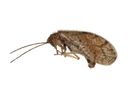
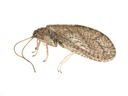
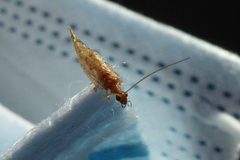
Micromus angulatus is a predatory brown lacewing (Hemerobiidae) distributed across Africa, Europe, Northern Asia (excluding China), North America, and Southern Asia. Both larvae and are active of aphids and other small soft-bodied insects, with third-instar larvae and female adults showing particularly high rates. The has been extensively studied as a agent against agricultural pests including Aphis craccivora, Illinoia lambersi, and Myzus persicae. Laboratory studies demonstrate temperature-dependent predation , with stable adult performance across 15–25°C and enhanced larval activity at warmer temperatures. A -level assembly of 1.29 Gb has been published, supporting its potential for programs.
Pronunciation
How to pronounce Micromus angulatus: /ˈmaɪkrəməs ˌænɡjʊˈleɪtəs/
These audio files are automatically generated. While they are not always 100% accurate, they are a good starting point.
Images
Habitat
Agricultural and forestry ; greenhouse and field crop environments. Laboratory rearing successful at 25±1°C, 60–65% relative humidity, 16:8 light:dark . Field presence associated with cultivated plants hosting prey, including Rhododendron, bell peppers, strawberries, and leguminous crops.
Distribution
Africa, Europe and Northern Asia (excluding China), North America, and Southern Asia. Described as globally distributed across major biogeographical regions.
Diet
Aphids (Illinoia lambersi, Aphis craccivora, Myzus persicae, Aphis glycines, Chaetosiphon fragaefolii, Aphis gossypii), scale insects (Pseudococcus citri), whiteflies, mites, and other small soft-bodied arthropods. Both larvae and are predatory; third-instar larvae consume 30–52 aphids per day at 25°C, with theoretical maximum daily rates of 625 aphids. Female adults maintain steady predation rates of approximately 30–40 aphids per day across 15–25°C.
Host Associations
- Illinoia lambersi - preyrhododendron
- Myzus persicae - preygreen peach aphid; used in laboratory rearing
- Aphis craccivora - preycowpea aphid
- Aphis glycines - preysoybean aphid
- Chaetosiphon fragaefolii - preystrawberry aphid
- Aphis gossypii - preycotton aphid; cited as target
- Pseudococcus citri - preycitrus mealybug; cited as target
- Ceratovacuna lanigera - preysugarcane woolly aphid; cited as target
- Rhododendron simsii - plant of prey
- Kalmia latifolia - alternative plant of prey
- Ilex aquifolium - alternative plant of prey
Life Cycle
, larva (three instars), pupa, and . Laboratory rearing achieves six at 25±1°C, 65±5% RH, 16:8 L:D cycle. Eggs deposited on cotton substrates. Third-instar larvae used in experiments are typically less than 24 hours post-. Adults become reproductively active at 7–8 days post-. Sex determined by presence of arcessus (hook-like copulatory organ) in males. First-instar larvae and female adults recommended for augmentative release in programs.
Behavior
Predatory throughout both larval and stages, unlike some relatives where only larvae feed. Female adults consistently more voracious than males across tested temperatures. Third-instar larvae show temperature-dependent rates, increasing significantly at 25°C compared to 15°C. Adults maintain stable predation rates across 15–25°C range, making them effective under cooler spring conditions. Exhibits intraspecific interference at high densities, with predation rate decreasing according to E = 0.6194P^−0.87. to prey fits Holling Type II model. Search decreases as prey density increases, with second-instar larvae showing greatest decrease and adults showing least.
Ecological Role
Predatory natural enemy of agricultural and forestry pests. Important agent in () systems, with demonstrated efficacy in controlling on peppers, strawberries, rhododendrons, and leguminous crops within two weeks of release. Reduces reliance on chemical and supports sustainable agricultural practices. Potential for early-season aphid suppression under cool conditions where other may be less effective.
Human Relevance
Evaluated and deployed as agent in greenhouse and field crop production. Used against pests on ornamental plants (Rhododendron), vegetables (peppers, strawberries), and legumes. First-instar larvae and female specifically recommended for release programs. sequencing (1.29 Gb, -level) supports research into its potential and genetic basis of predatory .
Similar Taxa
- Chrysoperla carneaBoth are predatory lacewings used in ; M. angulatus are predatory while C. carnea adults are not. At 15°C, M. angulatus third instars perform similarly to C. carnea third instars; at 20°C, C. carnea shows higher . M. angulatus third instars consistently outperform C. carnea second instars.
- Micromus posticusCongeneric brown lacewing with similar and predatory habits; distinguished by specific wing venation and genitalic characters requiring expert examination.
- Hemerobius stigmaAnother hemerobiid brown lacewing; M. angulatus distinguished by angular wing markings referenced in epithet, though precise identification requires microscopic examination of genitalia.
More Details
Genomic resources
-level assembly published 2025: 1.29 Gb total size, eight pseudochromosomes, 13,250 protein-coding genes, 83.65% repetitive sequences. Supports research into traits and genetics.
Augmentative release recommendations
First-instar larvae and female identified as optimal stages for release based on capacity and longevity. Can control green peach aphid (Myzus persicae) on bell peppers within two weeks of release.
Temperature performance
Particularly effective for early-season control in cool spring conditions (15°C) where rates remain stable in , offering advantage over with more temperature-sensitive performance.
Sources and further reading
- BugGuide
- Wikipedia
- iNaturalist taxon
- NCBI Taxonomy
- Catalogue of Life
- Friday Flower: Red Buckeye | Beetles In The Bush
- Bug Eric: Blacklighting Already?
- Uncategorized | Blog - Part 31
- Predation Efficiency and Biological Control Potential of Micromus angulatus Against Aphis craccivora
- The Lacewings Micromus angulatus and Chrysoperla carnea as Predators of the Rhododendron Aphid, Illinoia lambersi, Under Different Temperature Regimes.
- Chromosome-level genome of the brown lacewing Micromus angulatus (Stephens, 1836) (Neuroptera: Hemerobiidae).