
Nomophilini
Kuznetzov & Stekolnikov, 1979
Genus Guides
15Nomophilini is a tribe within the Spilomelinae of the Crambidae . The tribe was erected in 1979 and contains 24 with approximately 358 . It includes economically significant genera such as Nomophila, which contains the rice leaffolder (Nomophila noctuella), a notable agricultural pest. The tribe is characterized by diverse feeding habits across its constituent genera.
Pronunciation
How to pronounce Nomophilini: /nɔmoˈfiːlɪnaɪ/
These audio files are automatically generated. While they are not always 100% accurate, they are a good starting point.
Identification
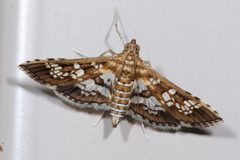
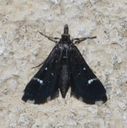
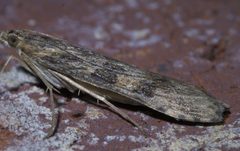
Members of Nomophilini are distinguished from other Spilomelinae tribes primarily by genitalia , particularly male genitalic structures. The tribe includes with varied wing patterns, ranging from relatively plain brown or gray to those with distinct spotting or banding. Identification to genus level requires examination of wing venation, labial palp structure, and genitalic characters. Species-level identification often necessitates dissection and comparison of genitalia.
Images
Habitat
vary considerably across the tribe's constituent . Many occupy agricultural and disturbed habitats, particularly those in the genus Nomophila. Other genera such as Desmia and Samea are frequently found in moist, vegetated areas including wetlands, marshes, and riparian zones. Some species occupy forest edges and open woodlands.
Distribution
The tribe has a distribution with present on all continents except Antarctica. Particular diversity is observed in tropical and subtropical regions. The Nomophila is nearly worldwide in distribution. Several genera show strong tropical affinities, particularly in the Neotropical, Afrotropical, and Indo-Malayan regions.
Seasonality
activity patterns vary by and geographic location. In temperate regions, most species fly during late spring through summer, with some extending into autumn. Tropical species may be active year-round with peaks during wet seasons. Multiple per year are common in warmer climates.
Diet
Larval feeding habits are diverse across the tribe. Many feed on herbaceous plants, with some specializing on grasses (Poaceae) including agricultural crops. The Nomophila includes species that feed on rice, corn, and other cereals. Some Desmia species feed on grape plants (Vitaceae). Other genera feed on various dicotyledonous plants including members of Asteraceae, Convolvulaceae, and other families.
Host Associations
Life Cycle
vary by and climate. are laid on plants. Larvae are typically external feeders on leaves, though some may web leaves together. occurs in silken cocoons, often within folded leaves or in soil debris. Multiple per year are typical in favorable climates. Some temperate species overwinter as larvae or pupae.
Behavior
are generally and attracted to light. Many are strong fliers, with some showing migratory tendencies. The rice leaffolder (Nomophila noctuella) is known for long-distance . Larvae of some species exhibit leaf-folding or leaf-rolling , creating shelters from which they feed.
Ecological Role
Larvae function as herbivores, consuming living plant tissue. Some serve as significant agricultural pests, affecting crop yields. The tribe contributes to as prey for , , and other natural enemies. may serve as for some plants, though this role is poorly documented.
Human Relevance
Several are economically important agricultural pests, particularly in rice . Nomophila noctuella, the rice leaffolder or rush leaffolder, damages rice, corn, sorghum, and other cereals by folding leaves and feeding within. Some species in other occasionally damage ornamental plants or crops. The tribe has been subject to research.
Similar Taxa
- SpilomeliniAnother tribe in Spilomelinae; distinguished by genitalic and wing venation patterns
- UdeiniRelated tribe in Spilomelinae; separated by structural characters of genitalia and larval
More Details
Taxonomic history
The tribe was established by Russian lepidopterists Vladimir Ivanovitsch Kuznetzov and Alexandr A. Stekolnikov in 1979 based on genitalic . The classification has been refined through subsequent phylogenetic studies, with some transferred in or out as relationships became clearer.
Notable genera
The Nomophila is the namesake and contains some of the most economically significant . Desmia is notable for attractive, often iridescent species. Samea and Diasemia are diverse genera with many tropical species. The genus Parathrausta was described as recently as 2024, indicating ongoing taxonomic work in the tribe.