
Epipagis
Hübner, 1825
Species Guides
3- Epipagis disparilis
- Epipagis fenestralis(Orange Epipagis Moth)
- Epipagis forsythae(Forsyth's Epipagis Moth)
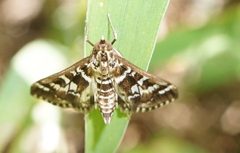
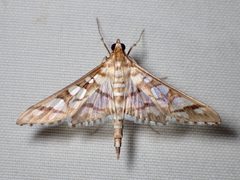
Epipagis is a of in the Crambidae, Spilomelinae, established by Jacob Hübner in 1825. The genus comprises approximately 14 recognized distributed across multiple continents. Species within Epipagis are characterized by their relatively small to medium size and typically exhibit patterned forewings with various markings. The genus includes both New World and Old World species, with records from North America, South America, Africa, and Asia.

Pronunciation
How to pronounce Epipagis: /ˌɛpɪˈpeɪdʒɪs/
These audio files are automatically generated. While they are not always 100% accurate, they are a good starting point.
Identification
Epipagis can be distinguished from related crambid by wing pattern characteristics, including the presence of distinct transverse lines and often contrasting discal spots on the forewings. The genus is placed in Spilomelinae based on morphological features of the male genitalia and wing venation. Specific identification to species level requires examination of genitalic structures and often reference to original descriptions, as external can be similar among .
Images
Distribution
of Epipagis have been recorded from North America (including Vermont, USA), South America, Africa, and Asia. The exhibits a broad geographic range typical of many Spilomelinae lineages. Specific distribution varies by species; for example, Epipagis fenestralis occurs in the Neotropics, while other species are documented from Madagascar, South Africa, and various Asian localities.
Similar Taxa
- UdeaUdea is another in Crambidae with similar wing patterns and size, but differs in genitalia and typically has more uniform wing coloration without the distinct pattern elements seen in Epipagis.
- HerpetogrammaHerpetogramma share the broad wing shape and patterning of many Epipagis, but can be distinguished by differences in wing venation and the structure of the male genitalia, particularly the valvae.
More Details
Taxonomic history
Epipagis was established by Jacob Hübner in 1825 with Epipagis fenestralis as the type . Several species have been transferred into or out of the over time, as reflected in the list of former species. The genus has been consistently placed in Crambidae, though its exact tribal assignment within the has been refined with modern phylogenetic studies placing it in Spilomelinae.
Species diversity
The currently includes 14 recognized , with the majority described in the late 19th and early 20th centuries. Several additional names have been synonymized or transferred to other genera. Species descriptions by Hampson (1899, 1913, 1918) and Pagenstecher (1907) form a significant portion of the taxonomic foundation for the genus.