
Herpetogramma
Lederer, 1863
grass webworms, sod webworms
Species Guides
12- Herpetogramma abdominalis
- Herpetogramma aeglealis(Serpentine Webworm Moth)
- Herpetogramma aquilonalis
- Herpetogramma bipunctalis(southern beet webworm moth)
- Herpetogramma fluctuosalis(Greater Sweet Potato Webworm Moth)
- Herpetogramma fraxinalis
- Herpetogramma nymphalis
- Herpetogramma pertextalis(Bold-feathered Grass Moth)
- Herpetogramma phaeopteralis(dusky herpetogramma moth)
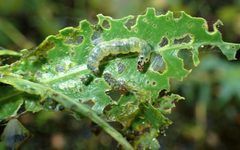
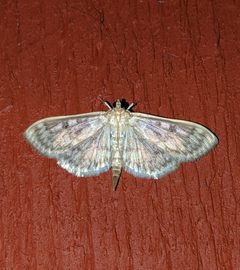
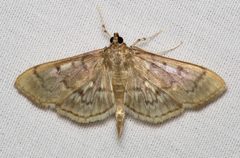
Herpetogramma is a of in the Crambidae, Spilomelinae, comprising approximately 106 distributed across North America, Eurasia, Australia, New Zealand, Central and South America. Larvae of most species are associated with grasses and related plants, with several species recognized as agricultural or turf pests. The genus was established by Julius Lederer in 1863.
Pronunciation
How to pronounce Herpetogramma: /hɛr.pɛ.toʊˈɡræmə/
These audio files are automatically generated. While they are not always 100% accurate, they are a good starting point.
Images
Distribution
North America, Eurasia, Australia, New Zealand, Central and South America. Specific distribution records include: Sweden (SE), Norway (NO), Vermont (USA).
Diet
Larvae of most feed on grasses (Poaceae). Specific documented associations include: blackberry (Rubus spp., Rosaceae), Solanum trilobatum (Solanaceae), Alternanthera philoxeroides (Amaranthaceae), and various warm-season turfgrasses.
Human Relevance
Several are recognized as agricultural or horticultural pests. Herpetogramma bipunctalis (southern beet webworm) damages blackberry leaves. Herpetogramma licarsisalis (grass webworm, tropical sod webworm) is a pest of turfgrasses and lawns. Herpetogramma basalis has been investigated as a agent for the weed Alternanthera philoxeroides in China.
Similar Taxa
- SitochroaFormerly included Herpetogramma palealis, now Sitochroa palealis; similar grass-associated crambid
- ZebroniaFormerly included Herpetogramma mahensis, now Zebronia mahensis; similar spilomeline crambids
Sources and further reading
- BugGuide
- Wikipedia
- GBIF taxonomy match
- iNaturalist taxon
- NCBI Taxonomy
- Catalogue of Life
- Noctuidae | Beetles In The Bush | Page 3
- A new species of the genus Herpetogramma Lederer (Lepidoptera, Crambidae) from India
- Biology of the Grass Webworm, Herpetogramma licarsisalis (Lepidoptera: Pyraustidae) in Hawaii1
- Biology of Herpetogramma bipunctalis (Fabricius) with descriptions of larval chaetotaxy
- Seasonal distribution ofHerpetogramma licarsisalis(Walker) (Lepidoptera: Pyralidae) in northern Northland
- Host Preference of the Grass Webworm, Herpetogramma licarsisalis to Warm Season Turfgrasses 1
- Herpetogramma bipunctalis (Lepidoptera: Crambidae) biology and techniques for rearing on leaves of the blackberry (Rubus spp., Rosaceae)
- Host Range of Herpetogramma basalis (Lepidoptera: Crambidae), a Biological Control Agent for the Invasive Weed Alternanthera philoxeroides (Centrospermae: Amaranthaceae) in China
- Morpho-Description and Certain Biological Aspects of Herpetogramma (Pachyzancla) licarsisalis (Walker) (Lepidoptera: Crambidae) on Two new Host Plants in Egypt