
Herpetogramma aeglealis
Walker, 1859
Serpentine Webworm Moth
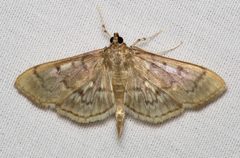
Herpetogramma aeglealis, commonly known as the serpentine webworm , is a of crambid moth first described by Francis Walker in 1859. It occurs in eastern North America and exhibits in coloration. The species has two distinct morphological forms, a typical form and a darker variant.
Pronunciation
How to pronounce Herpetogramma aeglealis: /hɛrpɛtoʊˈgræmə ɛˌɡliˈælɪs/
These audio files are automatically generated. While they are not always 100% accurate, they are a good starting point.
Identification
in hindwing coloration is the primary distinguishing feature: males show dirty white hindwings with dark grey markings, while females have a golden hue. The presence of two forms (typical and darker) adds to intraspecific variation. The contrasting postmedial line in males is particularly distinctive. Similar Herpetogramma such as H. phaeopteralis (tropical ) require careful comparison of wing pattern and geographic range for separation.
Images
Appearance
are sexually dimorphic. Males have hindwings that are dirty white with dark grey shading on the discal spot, wing , subterminal area, and an irregular but contrasting postmedial line. Females display a golden hue. Two color forms exist: a typical form and a darker form. Wingspan ranges from 29–34 mm in males and 27–31 mm in females.
Distribution
Eastern North America. Specific distribution records include Vermont, USA.
Diet
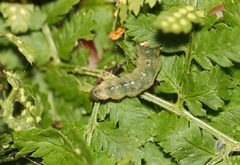
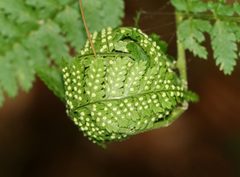
Larvae have been reared on herbaceous plants including ragwort, ferns, goldenrod, raspberry, pokeweed, wild ginger, and mayapple.
Host Associations
- ragwort - larval food plant
- ferns - larval food plant
- goldenrod - larval food plant
- raspberry - larval food plant
- pokeweed - larval food plant
- wild ginger - larval food plant
- mayapple - larval food plant
Similar Taxa
- Herpetogramma phaeopteralisSimilar general appearance and shared ; H. phaeopteralis occurs in tropical regions and has been recorded in Brazil, whereas H. aeglealis is restricted to eastern North America. Specific wing pattern differences require expert examination.
More Details
Taxonomic history
The Herpetogramma belongs to the Spilomelinae within Crambidae. The Crambidae was historically treated as a subfamily of Pyralidae but is now recognized as a distinct family within Pyraloidea.
Sexual dimorphism
The pronounced difference in hindwing coloration between males (dirty white with dark grey markings) and females (golden hue) is notable for the and aids in field identification of .