
Spoladea
Guenée, 1854
beet webworm, Hawaiian beet webworm, amaranth leaf-webber
Species Guides
1- Spoladea recurvalis(Beet Webworm Moth)
Spoladea is a of Crambidae containing two described , with S. recurvalis being a significant agricultural pest of amaranth, spinach, and sugar beet across tropical and subtropical regions worldwide. The genus was established by Guenée in 1854. S. recurvalis has achieved nearly distribution through human-mediated and is subject to intensive study for molecular mechanisms of production, , and plant interactions to support .
Pronunciation
How to pronounce Spoladea: //spɒlˈɑːdiə//
These audio files are automatically generated. While they are not always 100% accurate, they are a good starting point.
Identification
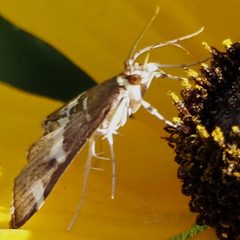
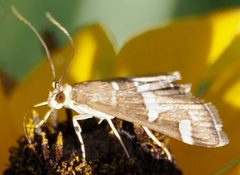
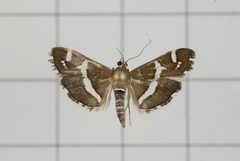
-level identification requires examination of wing pattern and genitalia; S. recurvalis can be distinguished by forewing pattern with a distinct whitish band curving from to dorsum, creating a characteristic 'recurved' appearance referenced in the specific epithet. Larvae produce webbing on foliage. S. mimetica is restricted to the Neotropics and differs in genital .
Images
Habitat
Associated with cultivated and wild Amaranthus in agricultural and disturbed ; occurs in tropical and subtropical lowlands where plants are available.
Distribution
Pantropical and subtropical distribution with extension into temperate regions; S. recurvalis documented across Africa, Asia, Australasia, Pacific Islands, North America (southeastern USA), Central America, Caribbean, and South America. Recently expanding in Europe with records from Italy and other Mediterranean countries.
Diet
Larvae feed on foliage of Amaranthus (primary ), with additional records from spinach (Spinacia oleracea) and sugar beet (Beta vulgaris). require nectar feeding for survival and sustained activity.
Host Associations
- Amaranthus - primary plantMain for larval development; multiple accessions show varying resistance levels
- Spinacia oleracea - plantSpinach; significant agricultural pest
- Beta vulgaris - plantSugar beet; 'beet webworm' origin
Life Cycle
Complete with , larval, pupal, and stages. Female S. recurvalis have a 3-day pre-oviposition period and continue egg-laying for up to 20 days post-. Larval development occurs within webbed foliage on plants.
Behavior
females exhibit highest activity during the pre-oviposition period. Flight performance is temperature-dependent with optimal range of 17–23°C; approximately 10% of females capable of sustained long-duration flight at 12°C. Adult feeding on nectar is essential for survival—deprivation of honey solution for even one day significantly depresses subsequent flight activity.
Ecological Role
Herbivore and agricultural pest; serves as for larval endoparasitoid Apanteles hemara, which is the natural enemy in African and Asian and has been studied for .
Human Relevance
Major pest of leafy vegetables and root crops in tropics and subtropics; causes complete foliage loss under severe . Subject of transcriptome sequencing for development of novel pest management strategies including -based control. Expanding distribution in Europe monitored through citizen science platforms.
Similar Taxa
- HymeniaFormerly included S. recurvalis as Hymenia recurvalis; distinguished by genitalic and wing venation characters placing Spoladea in Spilomelinae
- Other Crambidae webwormsLarval webbing shared with many Spilomelinae; identification requires genital dissection and wing pattern analysis
Sources and further reading
- BugGuide
- Wikipedia
- GBIF taxonomy match
- iNaturalist taxon
- NCBI Taxonomy
- Catalogue of Life
- Spoladea recurvalis . [Distribution map].
- Transcriptome analysis in the beet webworm, Spoladea recurvalis (Lepidoptera: Crambidae)
- Flight activity, reproduction, and adult nutrition of the beet webworm, Spoladea recurvalis (Lepidoptera: Pyralidae)
- THE BEETROOT MOTH SPOLADEA RECURVALIS (FABRICIUS, 1775) (LEPIDOPTERA CRAMBIDAE) EXPANDS ITS SPREAD IN ITALY: NEW RECORDS WITH FIRST OCCURRENCE IN SOME REGIONS
- Effects of Host Age and Density on the Performance of Apanteles hemara (Hymenoptera: Braconidae), a Larval Endoparasitoid of Spoladea recurvalis (Lepidoptera: Crambidae)
- Beet webworm, Spoladea recurvalis Fabricius (Lepidoptera: Crambidae) new to the Adrar region (south-west of Algeria) with comments on host plants and morphometry
- Temperature-dependent development, survival and reproduction ofApanteles hemara(Nixon) (Hymenoptera: Braconidae) onSpoladea recurvalis(F.) (Lepidoptera: Crambidae)
- Sex-specific spatial and temporal gene expressions of Pheromone biosynthesis activating neuropeptide (PBAN) and binding proteins (PBP/OBP) in Spoladea recurvalis
- Expression of Resistance in Amaranthus spp. (Caryophyllales: Amaranthaceae): Effects of Selected Accessions on the Behaviour and Biology of the Amaranth Leaf-Webber, Spoladea recurvalis (Lepidoptera: Crambidae)
- The Effects of Pest-Resistant Amaranth Accessions on the Performance of the Solitary EndoparasitoidApanteles hemara(Hymenoptera: Braconidae) Against the Amaranth Leaf-WebberSpoladea recurvalis(Lepidoptera: Crambidae)
- Temperature dependent immunological responses of Spoladea recurvalis exposed to entomopathogenic fungi.