
Herpetogramma abdominalis
Zeller, 1872
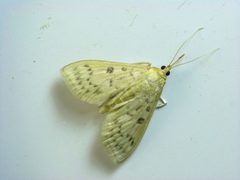
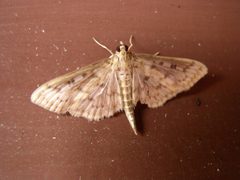
Herpetogramma abdominalis is a of in the Crambidae, described by Zeller in 1872. It occurs across North America from Washington to Nova Scotia and south to Mississippi and North Carolina. are active from April through September and have a wingspan of 22–35 mm. The larvae are known to feed on Laportea canadensis.
Pronunciation
How to pronounce Herpetogramma abdominalis: /hɛrˌpɛtoʊˈɡræmə æbˌdɒməˈnælɪs/
These audio files are automatically generated. While they are not always 100% accurate, they are a good starting point.
Identification
Distinguished from similar Herpetogramma by the combination of light orangish brown and white ground color on the forewings. The relatively plain wing pattern separates it from more boldly marked such as H. phaeopteralis. Genitalia examination may be required for definitive identification where ranges overlap.
Images
Appearance
have a wingspan of 22–35 mm. The forewings usually display a light orangish brown with a white ground color. The overall pattern is relatively plain compared to some .
Distribution
North America: recorded from Washington state east to Nova Scotia, and south to Mississippi and North Carolina.
Seasonality
are on wing from April to September.
Diet
Larvae feed on Laportea canadensis (Canadian woodnettle). feeding habits are not documented.
Host Associations
- Laportea canadensis - larval food plantCanadian woodnettle; sole documented
Similar Taxa
- Herpetogramma phaeopteralisSimilar size and general appearance, but H. phaeopteralis has more distinct dark markings and a more contrasting wing pattern; also primarily tropical to subtropical in distribution
More Details
Taxonomic note
Herpetogramma abdominalis belongs to the Spilomelinae within Crambidae, a large group of often small to medium-sized commonly known as grass moths or snout moths.