
Sitochroa
Hübner, 1825
Species Guides
4- Sitochroa aureolalis
- Sitochroa chortalis(Dimorphic Sitochroa Moth)
- Sitochroa dasconalis(Pearly Indigo Borer)
- Sitochroa palealis(carrot seed moth)
Sitochroa is a of in the Crambidae, established by Hübner in 1825. The genus includes approximately nine described distributed across North America and Eurasia. Some species, such as Sitochroa verticalis, have been documented in agricultural settings including corn fields, where they can be confused with pest species like the European corn borer due to superficial wing pattern similarities.
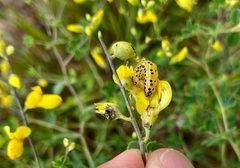
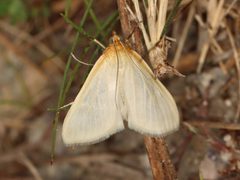
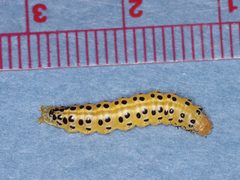
Pronunciation
How to pronounce Sitochroa: /sɪtəˈkrɔə/
These audio files are automatically generated. While they are not always 100% accurate, they are a good starting point.
Identification
Sitochroa can be distinguished from similar crambid through geometric morphometric analysis of wing venation. A study comparing Sitochroa verticalis with the European corn borer (Ostrinia nubilalis) and other co-occurring crambids (Anania hortulata, Pleuroptya ruralis) found significant differences in the arrangement of nine landmark points at junctions in the forewing central region. The of this wing venation-based identification method has been reported at 97%.
Images
Distribution
Documented from North America (including Vermont, USA) and Europe (Denmark, Norway, Sweden). Individual have broader ranges; for example, Sitochroa verticalis has been collected in agricultural fields in Poland.
Human Relevance
Sitochroa verticalis has been identified as a look-alike that complicates field identification of the European corn borer (Ostrinia nubilalis), a major agricultural pest. Misidentification can lead to inappropriate timing of interventions, such as the release of in programs.
Similar Taxa
- Ostrinia nubilalisEuropean corn borer; shares yellowish-brown wing coloration with lateral wavy dark bands and co-occurs in corn fields, requiring geometric morphometry of wing venation for reliable separation
- Anania hortulataCrambid with similar wing markings found in corn fields at the same time as pest
- Pleuroptya ruralisCrambid with comparable coloration and wing patterns that overlaps in and season with agricultural pest monitoring programs
More Details
Wing venation as identification tool
The has contributed to development of semiautomated identification systems for agricultural pest management. Landmark-based geometric morphometry of forewing venation—specifically nine junction points in the central wing region—allows non- to distinguish Sitochroa from economically important pests using scanned wing images and specialized software.