
Udea
Guenée, 1845
celery leaftier moth (U. rubigalis), snout moths
Species Guides
14Udea is a of snout moths in the Spilomelinae of the Crambidae, erected by Achille Guenée in 1845. The genus comprises approximately 216 known distributed across all continents except Antarctica, with notable diversity in Hawaii where about 41 species are native. Udea is placed in the tribe Udeini and is closely related to the genera Mnesictena, Deana, and Udeoides. The genus has been the subject of taxonomic revision, with former species transferred to other genera including Evergestis, Lirabotys, Achyra, Pyrausta, and Metasia.
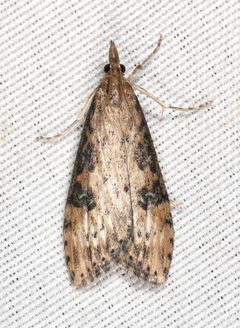
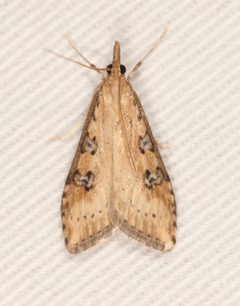
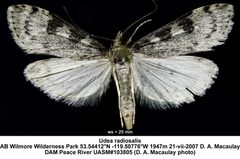
Pronunciation
How to pronounce Udea: /ˈjuː.diə/
These audio files are automatically generated. While they are not always 100% accurate, they are a good starting point.
Images
Distribution
Global distribution on all continents except Antarctica. Approximately 41 are native to Hawaii, indicating significant insular diversification. North American, European, and African species have been subject to detailed taxonomic study with proposed species groups.
Behavior
At least one , Udea rubigalis, has been documented visiting apple flowers and contributing to pollination of agricultural crops.
Ecological Role
Members of the participate in pollination of flowering plants, including economically important crops such as apple. This role has been demonstrated through exclusion experiments showing that nocturnally pollinated fruit can achieve similar seed set to diurnally pollinated fruit.
Human Relevance
Udea rubigalis, commonly known as the celery leaftier , is an agricultural pest whose larvae feed on celery and other crops. The same has been documented as a of apple flowers, illustrating dual ecological roles.
Similar Taxa
- MnesictenaFormerly included within Udea but now recognized as a separate comprising seven ; historically conflated with Udea in taxonomic treatments.
- DeanaClosely related within tribe Udeini; phylogenetically proximate to Udea.
- UdeoidesClosely related within tribe Udeini; shares recent common ancestry with Udea.
- EvergestisFormer Udea (Udea conquisitalis) transferred to this Glaphyriinae .
- PyraustaFormer Udea (Udea pauperalis) transferred to this Pyraustinae .
Sources and further reading
- BugGuide
- Wikipedia
- iNaturalist taxon
- NCBI Taxonomy
- Catalogue of Life
- Udea rubigalis moth on apple flower - Entomology Today
- Bug Eric: City Nature Challenge 2023 Recap
- P.M. Pollinators: Study Shines Light on Nocturnal Insects' Role in Apple Production
- Basis for a Qualitative Research Project: Introduction to Qualitative Research.
- Basis for a Qualitative Research Project: The Research Context.
- Interpreting Risk and Impact Measures in Nursing Research: Implications for Evidence-based Practice.
- Interventions for the Management of Bladder Spasms in Adults with Indwelling Urinary Catheters: A Nursing Practice-Oriented Systematic Review.
- Digital nursing: from misinformation to protagonism in public health.