
Udeini
Mally, Hayden, Neinhuis, Jordal & Nuss, 2019
Genus Guides
4- Conchylodes(Zebra conchylodes moth (for C. ovulalis))
- Ercta
- Sisyracera
- Udea(celery leaftier moth (U. rubigalis))
Udeini is a tribe of pyraloid moths in the Crambidae, Spilomelinae, erected in 2019 based on three genitalic synapomorphies. It comprises nine and 262 , including the large, genus Udea (214 species) and several geographically restricted genera. The tribe is notable for retaining plesiomorphic characters shared with the sister group Pyraustinae, distinguishing it from other Spilomelinae.
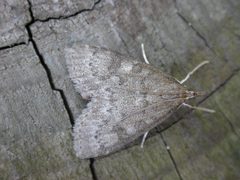
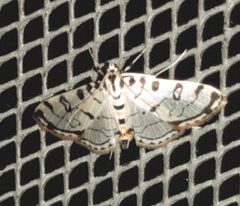
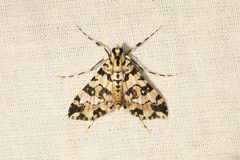
Pronunciation
How to pronounce Udeini: /uːˈdeɪni/
These audio files are automatically generated. While they are not always 100% accurate, they are a good starting point.
Identification
Udeini is distinguished from other Spilomelinae by three synapomorphies: male genitalia with a central vertical split of the juxta 10-60% of juxta length; female genitalia with a strongly sclerotised colliculum; and corpus bursae bearing an elongate rhombical, ovate, or "ediacaroid" signum. The tribe shares plesiomorphic traits with Pyraustinae, including reduced frenular bristles (to one bristle) in some Udea groups. Male genitalia show diverse uncus shapes: unicapitate in the Udea group, conical in Conchylodes, triangular in Sisyracera and Ercta, or reduced to a transverse band in Cheverella. Conchylodes has hair-like monofilament on the uncus versus thick bifid chaetae in most other Spilomelinae. Female genitalia have a strongly sclerotized antrum (except Cheverella), and an accessory signum is present at the ductus bursae-corpus bursae junction in most Udea species groups.
Images
Distribution
The tribe has a distribution with strong geographic partitioning among . Deana and Mnesictena are confined to New Zealand; Udeoides is restricted to the Afrotropical realm; Sisyracera is Neotropical. The genus Udea, with 214 , occurs on every continent except Antarctica, with the Udea ferrugalis species group particularly abundant on oceanic islands.
Diet
Larvae feed on diverse plant with varying degrees of specialization. Udea rubigalis is highly across many plant families. Mnesictena larvae feed on Muehlenbeckia (Polygonaceae), Urtica, and Australina (Urticaceae). Conchylodes larvae have been recorded from Annonaceae, Asteraceae, Boraginaceae, Cordiaceae, Malvaceae, and Platanaceae. Sisyracera and Cheverella caterpillars feed on Boraginaceae.
Host Associations
- Muehlenbeckia - food plantfor Mnesictena larvae
- Urtica - food plantfor Mnesictena larvae
- Australina - food plantfor Mnesictena larvae
- Annonaceae - food plantfor Conchylodes larvae
- Asteraceae - food plantfor Conchylodes larvae
- Boraginaceae - food plantfor Conchylodes, Sisyracera, and Cheverella larvae
- Cordiaceae - food plantfor Conchylodes larvae
- Malvaceae - food plantfor Conchylodes larvae
- Platanaceae - food plantfor Conchylodes larvae
Similar Taxa
- other Spilomelinae tribesUdeini differs in having hair-like monofilament on the uncus (Conchylodes group) versus thick bifid chaetae; strongly sclerotised colliculum and characteristic signum shape in female genitalia; and specific juxta split in males
- PyraustinaeUdeini shares plesiomorphic characters with Pyraustinae (reduced frenular bristles, non-euspilomeline genitalic features) but is distinguished by the three synapomorphies that define the tribe within Spilomelinae
More Details
Systematic history
The name Udeini was first proposed by Patrice Leraut in 1997 within Pyraustinae, but this name lacked a description required by ICZN Article 13.1 for names published after 1930, rendering it unavailable. The valid name was established in 2019 by Mally, Hayden, Neinhuis, Jordal & Nuss. Udeini is one of four 'non-euspilomeline' tribes in Spilomelinae, retaining ancestral morphological features.
Included genera
Nine with 262 : Cheverella (), Conchylodes, Deana, Ercta, Mnesictena, Sisyracera, Tanaophysa, Udea (type genus, 214 species), and Udeoides.