
Mecyna
Doubleday, 1849
Species Guides
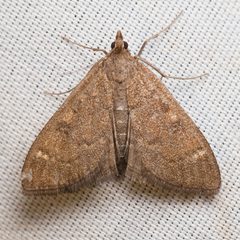
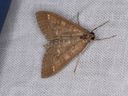
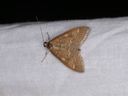
3- Mecyna mustelinalis
- Mecyna sp-one
- Mecyna submedialis(Orange-toned Mecyna Moth)
Mecyna is a of in the Crambidae, Spilomelinae. The genus was established by Henry Doubleday in 1849 and contains approximately 35 described distributed across Europe, Asia, and North America. Species in this genus are generally small to medium-sized moths with varied coloration including brown, yellow, and white patterns.
Pronunciation
How to pronounce Mecyna: //mɛˈkɪnə//
These audio files are automatically generated. While they are not always 100% accurate, they are a good starting point.
Identification
Mecyna can be recognized by their relatively slender body form and characteristic wing patterns, though specific identification often requires examination of genitalia. The is distinguished from related crambid genera by a combination of wing venation and abdominal structure; detailed dissection is typically necessary for definitive species-level identification. Many species exhibit pale ground colors with darker transverse lines or spots on the forewings.
Images
Distribution
Recorded from Europe (including Denmark and Sweden), Asia, and North America. Individual have more restricted ranges; for example, Mecyna flavalis and Mecyna asinalis occur in Europe, while Mecyna fuscimaculalis and Mecyna mustelinalis are North American.
Similar Taxa
- UdeaSimilar small crambid with pale coloration and transverse wing markings; distinguished by differences in male genitalia structure and wing venation patterns.
- PyraustaOverlapping size range and wing pattern elements; Mecyna typically shows more slender and different forewing shape with more pointed apex.
More Details
Taxonomic history
The has undergone several revisions, with some transferred to or from related genera. Formerly included species such as Mecyna andalusica and Mecyna catalalis have been reassigned to other .
Species diversity
The contains both widespread (Mecyna flavalis, Mecyna asinalis) and regional endemics with limited distributions in specific mountain ranges or islands.