
Samea
Guenée, 1854
Species Guides
3- Samea castellalis(Stained-glass Moth)
- Samea druchachalis
- Samea multiplicalis(salvinia stem-borer moth)
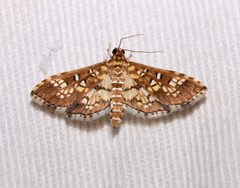
Samea is a of in the Crambidae, Spilomelinae, established by Achille Guenée in 1854. The genus comprises approximately 25 described distributed across tropical and subtropical regions. Samea multiplicalis, commonly known as the Salvinia moth, has been extensively studied for its potential use as a agent against the aquatic fern Salvinia. Most species in this genus appear to be associated with aquatic or semi-aquatic .
Pronunciation
How to pronounce Samea: /ˈsæmiə/
These audio files are automatically generated. While they are not always 100% accurate, they are a good starting point.
Images
Habitat
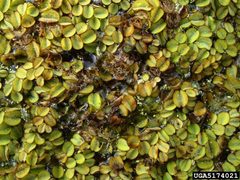
Aquatic or semi-aquatic environments, particularly those supporting floating fern vegetation. Samea multiplicalis is specifically associated with Salvinia plants in freshwater systems.
Distribution
Tropical and subtropical regions. Specific distribution varies by ; Samea multiplicalis has been recorded in regions where its Salvinia plants occur, including parts of the Americas, Africa, Asia, and Australia.
Host Associations
- Salvinia - Samea multiplicalis feeds on Salvinia floating ferns; associations for other in the are not well documented
Ecological Role
Samea multiplicalis has been investigated as a potential agent for Salvinia , which can form dense mats that disrupt aquatic .
Human Relevance
Samea multiplicalis has been evaluated for programs targeting Salvinia in waterways. The 's effectiveness as a control agent depends on environmental factors including temperature and plant nitrogen content.