
Nomophila
Hübner, 1825
Species Guides
1- Nomophila nearctica(Lucerne Moth)
Nomophila is a of in the Crambidae, Spilomelinae. The genus contains approximately 13 described distributed across multiple continents. The most widely known species is Nomophila noctuella, commonly called the Rush Veneer, which is a notable long-distance migrant in Europe and has been documented as an agricultural pest on alfalfa and other crops. Several species were described by Munroe in 1973, indicating significant taxonomic work on the genus in the mid-20th century.
Pronunciation
How to pronounce Nomophila: //nɒˈmɒ.fɪ.lə//
These audio files are automatically generated. While they are not always 100% accurate, they are a good starting point.
Identification
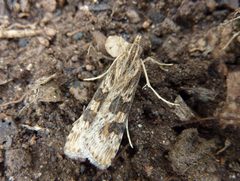
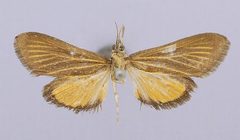
Members of Nomophila can be recognized by their relatively narrow wing shape compared to many other crambid , giving them a streamlined silhouette. The is placed in Spilomelinae, which can be distinguished from other Crambidae by specific wing venation and genitalic characters. -level identification requires examination of genitalia or detailed wing pattern analysis.
Images
Distribution
of Nomophila have been recorded from Europe, Africa, North America, South America, and parts of Asia including the Moluccas. Specific distribution records include Denmark, Norway, Sweden, and Vermont (USA). Nomophila noctuella is known as a migratory species in Europe.
Human Relevance
Nomophila noctuella has been documented as a pest of alfalfa (Medicago sativa) in agricultural systems, with records from Turkey identifying it as damaging to cultivated stands. The has also been observed feeding on Azolla species in aquatic environments. Its migratory may facilitate its spread into agricultural areas.
Similar Taxa
- Diasemiopsis ramburialBoth contain associated with aquatic ferns (Azolla spp.) and have been studied in comparative behavioral contexts; Diasemiopsis ramburial can be distinguished from Nomophila noctuella by behavioral characteristics and presumably morphological differences in wing pattern and genitalia.
Sources and further reading
- BugGuide
- Wikipedia
- GBIF taxonomy match
- iNaturalist taxon
- NCBI Taxonomy
- Catalogue of Life
- Insect Migration (Part 1) - Buglife Blog - Buglife
- Mudo Pryfed (Rhan 1) - Buglife Blog - Buglife
- Bug Eric: First Night of Blacklighting
- Bug Eric: April 2024
- Studies of the Life History of Nomophila Noctuella
- A new pest: Rush veneer, Nomophila noctuella Denis & Schiffermüller, 1775 (Lepidoptera: Crambidae) on alfalfa (Medicago sativa L.) and its larval parasitoids in Iğdır province of Turkey
- Distinguish Behavioral Characteristics of <em>Diasemiopsis Ramburial</em> (Duponchel, 1833) and <em>Nomophila noctuella</em> (Denis & Schiffermuller, 1775) (Lepidop-Tera: Crambidae) on Azolla spp.