
Eulachnus
Del Guercio, 1909
Pine Needle Aphids
Species Guides
1- Eulachnus rileyi(pine needle aphid)
Eulachnus is a of aphids in the Aphididae, comprising approximately 24 distributed across Eurasia and the Americas. All species are obligately associated with pine trees (Pinus spp.), feeding on phloem sap from needles. Several species, including E. agilis, E. brevipilosus, and E. rileyi, have been introduced beyond their native European ranges and have become significant pests of commercial pine forestry. The genus exhibits parthenogenetic with multiple overlapping annually, and are strongly influenced by seasonal climate patterns.
Pronunciation
How to pronounce Eulachnus: /juːˈlæknəs/
These audio files are automatically generated. While they are not always 100% accurate, they are a good starting point.
Identification
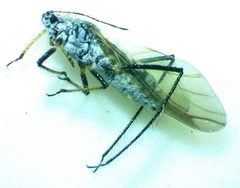
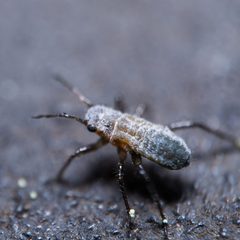
Eulachnus are distinguished from other by their exclusive association with Pinus plants and needle-feeding habit. Within the genus, species identification requires examination of morphological characters including body size, setal length, siphuncular structure, and caudal ; molecular markers (COI, ITS2) are increasingly used for definitive identification. E. agilis (spotted green pine needle aphid) has distinctive green coloration with dark spots; E. brevipilosus (green pine aphid) is uniformly green with short body hairs; E. rileyi (narrow brown pine aphid) is brownish in coloration. and females, as well as sexual morphs where known, show species-specific morphometric differences.
Images
Habitat
Strictly associated with pine forests and plantations; found on needles of Pinus in native, introduced, and commercial stands. suitability is constrained by mean temperature and mean temperature of the coldest quarter. In invaded ranges, species readily adapt to or introduced pine species, including commercially grown timber trees.
Distribution
Native to Eurasia; multiple introduced to the Americas, Africa, and other regions. E. agilis and E. rileyi show the greatest potential and have established on multiple continents. European distribution overlaps with native ranges of Pinus species. Documented occurrences include: Europe (widespread), North America (introduced), North Africa (Tunisia, Algeria), Tanzania, Zimbabwe, and Iran.
Seasonality
vary by and region. In temperate zones, peak abundance typically occurs in spring (April–May), with secondary peaks possible in autumn. In Mediterranean and subtropical regions, peak densities often occur during dry winter months, with lowest densities during rainy seasons. E. tuberculostemmatus in Iran shows major peaks between 11 April and 23 May and minor peaks mid-November to mid-December; no sexual morphs observed in this during study period.
Diet
Phloem sap extracted from pine needles using . Feeding causes needle , discoloration, and premature .
Host Associations
- Pinus - obligate all in ; specific Pinus species associations vary by species
- Pinus cembra - for E. brevipilosus; new record
- Pinus brutia var. eldarica - for E. tuberculostemmatus in Iran
- Pinus halepensis - for E. agilis in North Africa
- Pinus nigra subsp. mauretanica - for E. tuberculostemmatus in Algeria; first record
- Pinus patula - for E. rileyi in Tanzania
- Pinus elliottii - for E. rileyi in Tanzania
- Pinus sylvestris - for E. agilis
Life Cycle
is primarily parthenogenetic and , with multiple overlapping per year. Sexual morphs (oviparae and males) are produced by some under specific conditions, though their occurrence appears variable; no sexual morphs were observed in a two-year study of E. tuberculostemmatus in Iran. stage varies: in some , or active nymphs/ in milder climates. Developmental rate and are temperature-dependent, with optimal performance typically between 20–25°C.
Behavior
Forms dense colonies on pine needles. Feeding involves characteristic probing with stylet penetration through needle tissue to reach phloem; sustained feeding periods interspersed with salivation. morphs disperse to new trees. -attendance has not been documented for this . Aphids respond variably to approach: majority remain motionless, while responding individuals are attacked more frequently but with lower oviposition success.
Ecological Role
Primary consumers in pine forest ; significant herbivores that can reduce tree growth and cause needle . Serve as prey for diverse natural enemy including Coccinellidae (Adalia bipunctata, Coccinella septempunctata, Hippodamia variegata, Propylea quatuordecimpunctata), lacewings, spiders, stink bugs (Pentatomidae), and (Diaeretus leucopterus). Hyperparasitoids (e.g., Asaphes suspensus) attack primary parasitoids. can alter forest ecosystem dynamics and competitive interactions among tree .
Human Relevance
Several are economically important pests of commercial pine forestry, causing growth reduction, needle , and premature needle drop. E. agilis, E. brevipilosus, and E. rileyi are of particular concern in introduced ranges. Management recommendations include regular monitoring, tending operations (thinning, weeding, pruning), and using introduced such as Tetraphleps raoi or complementary natural enemy . The Diaeretus leucopterus has been investigated for biological control but shows limited effectiveness when used alone due to -independent rates and high hyperparasitism.
Similar Taxa
- CinaraAnother large of conifer-feeding aphids in Aphididae; distinguished by association with twigs and branches rather than needles, and different morphological characters including siphuncular shape and body proportions
- Schizolachnus of pine-feeding aphids in same tribe Eulachnini; morphologically similar but differs in tissue preferences and specific morphometric traits
More Details
Taxonomic revision
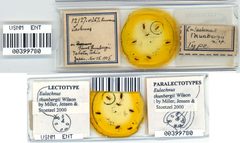
A 2017 revision of European Eulachnus recognized 12 using integrative , described E. stekolshchikovi as new, designated neotypes and lectotypes for several species, and proposed new synonyms. E. mingazzinii and E. nigrofasciatus were regarded as incertae sedis.
Invasive potential
modeling indicates that favorable climatic conditions for E. agilis and E. rileyi may exist on every continent, with these two showing greatest potential for global range expansion. Successful establishment in invaded ranges depends on presence of suitable Pinus , whether native or introduced.
Drought stress interaction
Laboratory studies demonstrate that E. tuberculostemmatus performs significantly better on highly drought-stressed trees, showing higher survival, longevity, and . This suggests climate change-mediated drought may exacerbate pest .
Sources and further reading
- BugGuide
- Wikipedia
- GBIF taxonomy match
- iNaturalist taxon
- NCBI Taxonomy
- Catalogue of Life
- Probing Behavior of Eulachnus agilis and Injury to Scotch Pine12
- European species of the aphid genus Eulachnus Del Guercio, 1909 (Hemiptera: Aphididae: Lachninae): revision and molecular phylogeny
- Biology and Population Dynamics of the Pine Needle Aphid, Eulachnus rileyi (Williams) in Zimbabwe
- The biology and ecology of pine aphid, Eulachnus tuberculostemmatus (Hemiptera: Aphididae) and its demographic responses to environmental changes
- Population dynamics and foraging behaviour ofDiaeretus leucopterus(Hymenoptera: Braconidae), and its potential for the biological control of pine damagingEulachnusspp. (Homoptera: Aphididae)
- First report of Eulachnus tuberculostemmatus (Theobald, 1915) on Pinus nigra subsp. mauretanica stands in Algeria
- Pine pest aphids of the genus Eulachnus (Hemiptera: Aphididae: Lachninae): how far can their range extend?
- First record of Diaeretus leucopterus (Haliday) (Hymenoptera, Braconidae, Aphidiinae), the parasitoid of the aphid species, Eulachnus agilis (Kaltenbach) (Hemiptera, Aphididae) in North Africa
- Distribution and Abundance of Pine Needle Aphids (Eulachnus rileyi Williams) and Their Potential Natural Enemies on Pine Tree Species (Pinus patula and Pinus elliottii) at Sao Hill Forest Plantation, Tanzania