
Trichosirocalus
Colonnelli, 1979
rosette weevils, crown weevils
Species Guides
1- Trichosirocalus horridus(Thistle Crown Weevil)
A of small true weevils native to the Palearctic region. Several have been widely introduced to North America, Australia, and New Zealand as agents for thistles. The genus was historically treated as containing a single species, T. horridus, but integrative taxonomic studies using molecular and morphological data have revealed multiple distinct species with different associations.
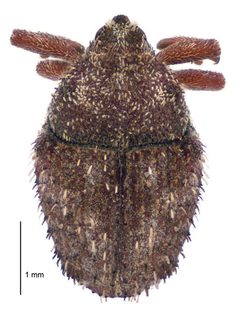
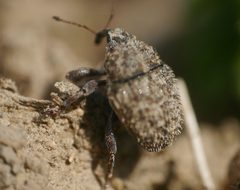
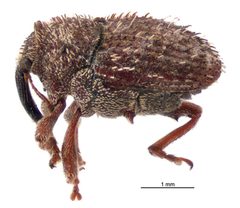
Pronunciation
How to pronounce Trichosirocalus: /ˌtrɪkoʊsɪˈroʊkələs/
These audio files are automatically generated. While they are not always 100% accurate, they are a good starting point.
Images
Distribution
Native to the Palearctic region, with records from Europe including France, Germany, Italy, Switzerland, Austria, and Scandinavia (Denmark, Norway, Sweden). Multiple have been introduced to North America (USA, Canada), Australia, and New Zealand for programs.
Human Relevance
Several have been introduced internationally as agents for thistle species (Carduus, Cirsium, and Onopordum). was first released in North America in 1974 for musk thistle control and has become established across multiple continents. Taxonomic confusion regarding species boundaries has complicated tracking of introduced .
Similar Taxa
- Ceutorhynchus trimaculatusOften studied and released alongside Trichosirocalus for thistle ; both are small ceutorhynchine weevils with similar rosette-feeding habits on Carduus thistles
- Rhinocyllus conicusAnother introduced weevil for thistle ; Trichosirocalus can be distinguished by their smaller size and preference for rosette-stage plants rather than flowering
Misconceptions
The was long considered (containing only T. horridus). A 2002 taxonomic revision split this into three (T. horridus, T. briesei, T. mortadelo) based on and purported specificity. Subsequent molecular and integrative studies demonstrated that only two species are valid (T. horridus and T. briesei), with T. mortadelo synonymized under T. horridus. This taxonomic instability has caused uncertainty about which species were released in various countries.
Sources and further reading
- BugGuide
- Wikipedia
- GBIF taxonomy match
- iNaturalist taxon
- NCBI Taxonomy
- Catalogue of Life
- REARING OF TRICHOSIROCALUS HORRIDUS (COLEOPTERA: CURCULIONIDAE) LARVAE IN ARTIFICIAL DIETS
- DISPERSAL OF TRICHOSIROCALUS HORRIDUS (PANZER) (COLEOPTERA: CURCULIONIDAE) IN SOUTHWEST VIRGINIA
- Palearctic Distribution and Host Plants of Ceutorhynchus trimaculatus and Trichosirocalus horridus (Coleoptera: Curculionidae)
- Biology of Two Weevils, Ceutorhynchus trimaculatus and Trichosirocalus horridus1 , on Carduus spp. 2 in Europe
- COMPARISON OF THE SEASONAL OCCURRENCE OF TRICHOSIROCALUS HORRIDUS (PANZER) (COLEOPTERA: CURCULIONIDAE) IN VIRGINIA BETWEEN 1981–83 and 1979
- Impact of the rosette crown weevil Trichosirocalus briesei on the growth and reproduction of Onopordum thistles
- Genetic and morphological studies ofTrichosirocalusspecies introduced to North America, Australia and New Zealand for the biological control of thistles