
Ceutorhynchinae
Minute Seed Weevils
Tribe Guides
6- Ceutorhynchini
- Cnemogonini(minute seed weevils)
- Hypurus
- Mononychus(minute seed weevils)
- Phytobiini(minute seed weevils)
- Scleropterini(minute seed weevils)
Ceutorhynchinae is a large of minute seed weevils within Curculionidae, comprising over 150 and more than 1,000 described worldwide. The subfamily is predominantly phytophagous and exhibits strong associations with Brassicaceae, though plant relationships vary across genera. The genus Ceutorhynchus is particularly diverse and includes significant agricultural pests such as the cabbage seedpod weevil (Ceutorhynchus obstrictus), as well as species with potential for of weeds. The subfamily shows highest diversity in the Holarctic region, especially the Palaearctic.
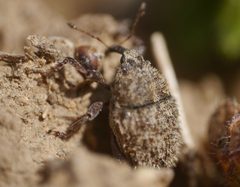
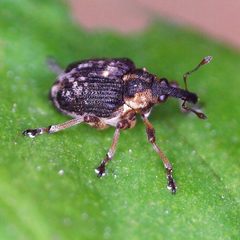
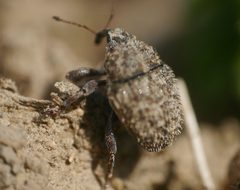
Pronunciation
How to pronounce Ceutorhynchinae: //ˌsjuːtɒˈrɪntʃɪni//
These audio files are automatically generated. While they are not always 100% accurate, they are a good starting point.
Images
Habitat
Members of this occupy diverse environments across all natural zones of the Holarctic, including upland and high-latitude in the Palaearctic region. Specific have been documented in Mediterranean and Saharo-Gobian regions, as well as in transitional zones between Holarctic and tropical regions in East Asia and Mexico. Some species are closely associated with agroecosystems, particularly canola-growing regions.
Distribution
Worldwide, with greatest diversity in the Holarctic region. The Palaearctic fauna is the most diversified, containing predominantly and subendemic . The Nearctic region also supports substantial endemic diversity. Transitional faunas occur at contact zones with tropical regions in East Asia and Mexico. Documented from India (13 genera, 45 ), China, Thailand, Japan, and across North America and Europe.
Diet
Phytophagous; feeding habits vary by and . The genus Ceutorhynchus is mainly associated with Brassicaceae. Larvae of Sinauleutes bigibbosus develop in current-year branches of Hydrangea serrata. Rhinoncomimus klapperichi has been recorded from Polygonum hydropiper (Polygonaceae). Specific dietary habits for most genera remain undocumented.
Host Associations
- Brassicaceae - primary for Ceutorhynchus and related generaincludes cultivated canola and mustard crops as well as wild
- Hydrangea serrata (Thunb.) Ser. - larval current-year branches; Saxifragaceae
- Polygonum hydropiper L. - plantPolygonaceae; recorded for Rhinoncomimus klapperichi
- Barbarea vulgaris R. Br. - associationyellow rocket; Brassicaceae
- Lepidium densiflorum - associationcommon pepper grass; Brassicaceae
- Cardamine pensylvanica Muhl. - associationPennsylvania bittercress; Brassicaceae
Life Cycle
Larval development occurs within plant tissues. For Sinauleutes bigibbosus, larvae specifically inhabit current-year branches. Many likely complete development within seeds, fruits, or stems of host plants, consistent with the 'minute seed weevils,' though specific details vary by species and remain undocumented for most .
Ecological Role
Some function as significant agricultural pests of cultivated Brassicaceae, particularly canola and related crops. Others serve as natural enemies of weeds and have been evaluated as potential agents for or problematic plants. The contributes to trophic interactions in agroecosystems, with documented relationships affecting .
Human Relevance
Includes economically important pests such as the cabbage seedpod weevil (Ceutorhynchus obstrictus), an damaging cultivated Brassicaceae in North America. Some native are being investigated as agents for Brassicaceae weeds. Monitoring of Ceutorhynchinae diversity and abundance provides baseline data for assessing impacts of introduced biological control agents on native weevil .
Sources and further reading
- BugGuide
- Wikipedia
- iNaturalist taxon
- NCBI Taxonomy
- Annotated checklist of Indian Ceutorhynchinae (Coleoptera: Curculionidae)
- First Host Record for Sinauleutes bigibbosus (Hustache) (Coleoptera: Curculionidae: Ceutorhynchinae)
- Geographical distribution of the weevil subfamily Ceutorhynchinae (Coleoptera, Curculionidae)
- Assemblage of Ceutorhynchinae Weevils Associated With Brassicaceae in Quebec (Canada) Agroecosystems
- Host plant use and its impact on patterns of evolutionary diversification in the weevil subfamily Ceutorhynchinae (Curculionidae: Coleoptera)
- New Taxa and Host Associations of the Weevil Subfamily Ceutorhynchinae (Coleoptera, Curculionidae) from Thailand
- Taxonomic Review of the Genus Rhinoncomimus (Coleoptera: Curculionidae: Ceutorhynchinae) with description of a new species from Yunnan, China
- A review of the genus <i>Pelenomus</i> Thomson (Coleoptera: Curculionidae: Ceutorhynchinae) from China
- New Data on the Systematics and Distribution of the Weevil Subfamily Ceutorhynchinae (Coleoptera, Curculionidae) in the New World
- Trophic Interactions of Ceutorhynchinae spp. (Coleoptera: Curculionidae) with Their Host Plants (Brassicaceae) and Their Parasitoids in the Agroecosystem of Quebec, Canada.