
Rhinoncomimus
Wagner, 1940
Species Guides
1- Rhinoncomimus latipes(mile-a-minute weevil)
Rhinoncomimus is a of minute seed weevils in the Curculionidae, established by Wagner in 1940. The genus comprises approximately eight described distributed in Eastern Asia, with China representing a center of diversity. One species, R. latipes (the mile-a-minute weevil), has been extensively studied and deployed as a agent for the vine Persicaria perfoliata in North America. The genus is characterized by associations with Polygonaceae, particularly Persicaria and Polygonum species.
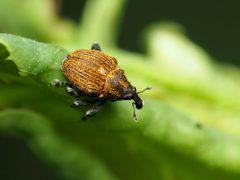
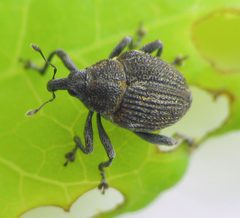
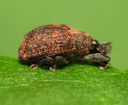
Pronunciation
How to pronounce Rhinoncomimus: //ˌraɪnɒŋˈkoʊmɪməs//
These audio files are automatically generated. While they are not always 100% accurate, they are a good starting point.
Images
Habitat
Terrestrial; associated with Polygonaceae plants, particularly Persicaria and Polygonum . R. latipes occupies edge and shows higher densities in sun-exposed versus shaded conditions.
Distribution
Native range: Eastern Asia (China, including Yunnan Province; Japan). Introduced range: North America (eastern United States), where R. latipes has been released for of mile-a-minute weed.
Diet
Herbivorous; feeding on Polygonaceae. R. latipes feeds primarily on Persicaria perfoliata (mile-a-minute weed). R. klapperichi has been recorded on Polygonum hydropiper.
Host Associations
- Persicaria perfoliata - primary (R. latipes)target for ; mile-a-minute weed
- Polygonum hydropiper - recorded for R. klapperichi, the type of the
- Native North American Persicaria species - minimal non-target feedingobserved in field studies with R. latipes; significantly lower preference than target
Life Cycle
R. latipes: laid on leaves and stems of plant; larvae bore into stems, stunting growth and delaying seed production.
Behavior
R. latipes exhibits positive and two-phase -finding : initial controlled primarily by phototaxis, with later stages jointly influenced by host cues and light conditions. show preferential of edge and higher activity in sun versus shade. Strong host fidelity demonstrated in field conditions.
Ecological Role
R. latipes serves as a agent for Persicaria perfoliata in North America, reducing weed with demonstrated -specificity and low risk to native flora.
Human Relevance
R. latipes has been intentionally introduced to the eastern United States as a biocontrol agent for mile-a-minute weed, with releases documented in New York and other states.
Similar Taxa
- Other Ceutorhynchinae weevilsminute seed weevils with similar ; Rhinoncomimus distinguished by -level characters described in taxonomic revisions
- Other Rhinoncomimus specieseight described within require identification using keys and habitus illustrations; R. rubripes possibly junior synonym of R. niger
Sources and further reading
- BugGuide
- Wikipedia
- GBIF taxonomy match
- iNaturalist taxon
- Catalogue of Life
- Rhinoncomimus latipes Archives - Entomology Today
- NY to Unleash Asian Weevils to Fight Invasive Vines
- Phototaxis, Host Cues, and Host-Plant Finding in a Monophagous Weevil, Rhinoncomimus latipes
- Field host-specificity of the mile-a-minute weevil, Rhinoncomimus latipes Korotyaev (Coleoptera: Curculionidae)
- Preferential Edge Habitat Colonization by a Specialist Weevil, <I>Rhinoncomimus latipes</I> (Coleoptera: Curculionidae)
- Taxonomic Review of the Genus Rhinoncomimus (Coleoptera: Curculionidae: Ceutorhynchinae) with description of a new species from Yunnan, China
- Effects ofRhinoncomimus latipeson the growth and reproduction ofPersicaria perfoliata,an invasive plant in North America
- Host specificity of the Asian weevil, Rhinoncomimus latipes Korotyaev (Coleoptera: Curculionidae), a potential biological control agent of mile-a-minute weed, Polygonum perfoliatum L. (Polygonales: Polygonaceae)
- Feeding and Oviposition Behavior ofRhinoncomimus latipesKorotyaev (Coleoptera: Curculionidae) and Its Predicted Effectiveness as a Biological Control Agent forPolygonum perfoliatumL. (Polygonales: Polygonaceae)