
Mononychus
Germar, E.F., 1823
minute seed weevils
Species Guides
1- Mononychus vulpeculus(iris weevil)
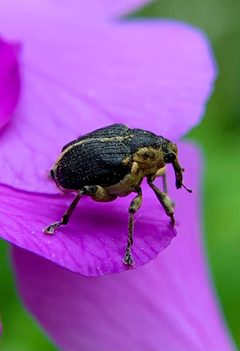
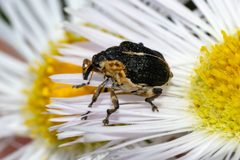
Mononychus is a of minute seed weevils (Curculionidae: Ceutorhynchinae) established by E.F. Germar in 1823. The genus contains at least 25 described distributed across North America, Europe, and parts of Central Asia. stages have been described for at least two species, M. punctumalbum and M. schoenherri, which exhibit distinctive morphological characters within the . M. punctumalbum, commonly known as the iris weevil, has been documented feeding on Iris species in central Europe.
Pronunciation
How to pronounce Mononychus: //mɒˈnɒnɪkəs//
These audio files are automatically generated. While they are not always 100% accurate, they are a good starting point.
Images
Distribution
North America, Europe, and parts of Central Asia
Host Associations
- Iris species - plantM. punctumalbum specifically associated with Iris in central Europe; role in decline of plant abundance in natural and anthropogenic documented
Life Cycle
stages include , larvae (with last instar described), and pupae. Larvae and pupae of M. punctumalbum and M. schoenherri are morphologically distinctive within Ceutorhynchinae.
Human Relevance
M. punctumalbum (iris weevil) is recognized as a pest of Iris in gardens and natural , implicated in dramatic declines of plant abundance.
More Details
Taxonomic history
Originally published by E.F. Germar in Insectorum novae aut minus cognitae, p. 241 (1823).
Immature stage descriptions
First detailed descriptions of last larval instars and pupae for any Mononychus were published in 2017 for M. punctumalbum and M. schoenherri; no immatures of other species in the had been previously described.