
Ceutorhynchus
Germar, 1823
Species Guides
25- Ceutorhynchus americanus
- Ceutorhynchus anthonomoides(minute seed weevil)
- Ceutorhynchus bolteri(minute seed weevil)
- Ceutorhynchus disturbatus(minute seed weevil)
- Ceutorhynchus erwini
- Ceutorhynchus erysimi
- Ceutorhynchus inaffectatus
- Ceutorhynchus lecontei(minute seed weevil)
- Ceutorhynchus medialis
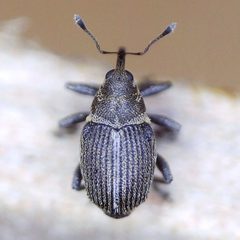
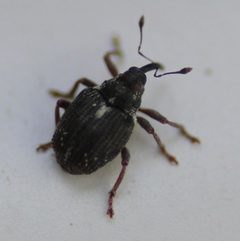
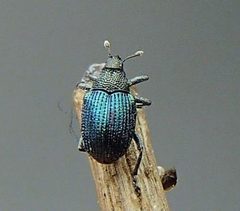
Ceutorhynchus is a large of true weevils comprising at least 400 described . The genus is notable for its association with brassicaceous plants, with many species acting as stem miners or seedpod . Several species are significant agricultural pests of oilseed rape, including C. napi, C. pallidactylus, and C. obstrictus. At least one species, C. succinus, is known from Eocene Baltic amber, indicating an ancient evolutionary history.
Pronunciation
How to pronounce Ceutorhynchus: //ˌkjuːtəˈrɪŋkəs//
These audio files are automatically generated. While they are not always 100% accurate, they are a good starting point.
Images
Habitat
Primarily associated with Brassicaceae plants; many inhabit agricultural fields of oilseed rape, while others occur in natural on wild crucifers. Some species are associated with specific plants such as Pulmonaria obscura.
Distribution
Widespread across the Palearctic region, with records from Finland, Latvia, and other European countries. At least one (C. succinus) is known from Eocene Baltic amber deposits in Europe. Distribution varies by species, with some having restricted ranges.
Diet
Larvae of most studied feed internally on plant tissues: stem miners consume pith and vascular tissues within Brassica stems; seedpod develop within developing fruits. feed on plant tissues, though specific adult feeding habits are poorly documented for most species.
Host Associations
- Brassica napus (oilseed rape) - primary Major for multiple pest including C. napi, C. pallidactylus, C. obstrictus, C. typhae, and C. sulcicollis
- Capsella bursa-pastoris (shepherd's purse) - for C. floralis; females oviposit into seedpods
- Pulmonaria obscura - for C. pallidicornis and C. larvatus in Finland
Life Cycle
Complete with larval development occurring concealed within plant tissues. Larvae are internal feeders, mining stems or developing within seedpods. occurs within the host plant or in soil. timing varies by ; C. pallidactylus and C. typhae emerge earlier than C. pallidactylus in some regions.
Behavior
Females of at least two (C. floralis and C. assimilis) mark objects with oviposition deterring to partition resources among progeny. Some species show oviposition preference for plants with larger stem diameters. C. pallidactylus females preferentially oviposit into plants already infested by C. napi, suggesting complex host selection . Larvae of co-occurring species may show spatial partitioning within shared hosts.
Ecological Role
Agricultural pests of significant economic importance in oilseed rape . Intraspecific and occurs among larvae sharing plant stems, with asymmetric competitive outcomes documented between C. napi and C. pallidactylus. Some appear to be rare and potentially overlooked due to secretive habits.
Human Relevance
Several are major pests of oilseed rape, causing yield losses through stem mining and pod damage. application targeting Ceutorhynchus species is common in agriculture, though timing is complicated by species-specific . At least one potentially (C. contractus pallipes) occurs on Lundy Island, Britain, representing a conservation interest.
Similar Taxa
- Other Ceutorhynchini generaRequires examination of rostral and genitalic characters; Ceutorhynchus is distinguished by specific combinations of morphological traits within the tribe
- Other Curculionidae stem minersLarval damage may be indistinguishable without rearing ; identification requires adult specimens
More Details
Taxonomic uncertainty
The status of C. contractus pallipes on Lundy Island is currently in taxonomic uncertainty; it may represent a valid or .
Species diversity
With over 400 described , Ceutorhynchus is one of the larger within Curculionidae, yet the of most species remains extremely poorly known.
Sources and further reading
- BugGuide
- Wikipedia
- GBIF taxonomy match
- iNaturalist taxon
- NCBI Taxonomy
- Catalogue of Life
- In Search of Britain’s Endemics - Buglife Blog - Buglife
- Oviposition and Host Object Marking by the Females of Ceutorhynchus floralis (Coleoptera: Curculionidae)
- Interactions between the stem‐mining weevils Ceutorhynchus napi Gyll. and Ceutorhynchus pallidactylus (Marsh.) (Coleoptera: Curculionidae) in oilseed rape
- <i>Ceutorhynchus larvatus</i> Schultze and <i>Ceutorhynchus pallidicornis</i> Gougelet & Brisout de Barneville: o<i>Pulmonaria obscura</i> living weevils in Finland (Coleoptera: Gurculionidae)
- The Influence of Synthetic Insecticides on the Dynamics of Cabbage Stem Weevil (Ceutorhynchus pallidactylus Marsh.) and Cabbage Pod Weevil (Ceutorhynchus obstrictus Marsh.) in Winter Oilseed Rape
- Conserved and Antenna-Biased Odorant Receptor in the Rape Stem Weevil Ceutorhynchus asper Tuned to Green Leaf Volatiles from Hosts