
Liodessus
Guignot, 1939
Species Guides
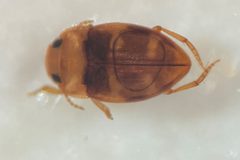
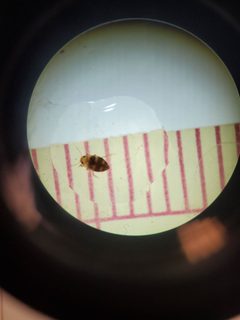
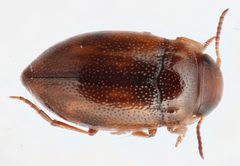
6Liodessus is a of small diving beetles in the Dytiscidae, tribe Bidessini. occur across the Americas from North America through the Andes to southern South America, with notable diversity in high-altitude wetlands and páramo . Many species inhabit shallow, exposed pools and temporary water bodies, showing phenotypic plasticity in body form correlated with permanence. The genus contains numerous species, with several new species described from the high Andes of Peru and Colombia in recent years. Taxonomic resolution relies heavily on male genital .
Pronunciation
How to pronounce Liodessus: /li.oˈdɛs.sus/
These audio files are automatically generated. While they are not always 100% accurate, they are a good starting point.
Identification
-level identification in Liodessus requires examination of male genitalia; these structures provide the only consistently reliable characters for distinguishing species. External characters including coloration, punctation, and general body shape are too variable within and between species to be diagnostic. Females are generally not distinguishable based on known morphological features. The is characterized within Bidessini by combinations of pronotal and elytral striation patterns, body form, and male genital structure. Some , such as the L. affinis group in North America and the L. bogotensis complex in Colombia, contain morphologically similar species requiring detailed genital examination and geographic context for resolution.
Images
Habitat
inhabit diverse aquatic environments including permanent and temporary bodies of water. Documented include shallow exposed peatland pools and puddles in high Andean steppes and Puna (above 3,400 m), temporary pools, peat bogs, wetlands, and other small water bodies. Some show association with specific habitat types: L. chilensis in subantarctic regions occupies both permanent wetlands and temporary pools, with detectable morphological differences between populations.
Distribution
Widespread across the Americas. North American records include the United States and Canada. South American distribution extends through the Andes from Colombia, Peru, and Bolivia (at elevations of 3,400–4,900 m) to Chile and Argentina, including subantarctic regions (Navarino Island, Magallanes). Colombian records include multiple departments (Atlántico, Bogotá, Bolívar, Casanare, Chocó, Cundinamarca, Huila, Santander, Tolima, Valle del Cauca). The also occurs in Fiji (L. fijiensis).
Behavior
Liodessus chilensis exhibits phenotypic plasticity in body shape and size correlated with permanence: in temporary pools have shorter, broader terminal and smaller body size, while those in permanent peat bogs and wetlands have longer, more elongated elytra. This plasticity has been interpreted as potentially adaptive to different hydrological regimes.
Similar Taxa
- BidessusAlso in tribe Bidessini; distinguished by genital and external morphological characters, though precise boundaries between Liodessus and related bidessine have been considered taxonomically problematic
- Hydroporinae genera (other small diving beetles)Similar small size and preferences; Liodessus distinguished by combination of pronotal structure, elytral striation, and male genital
More Details
Taxonomic History
The was established by Guignot in 1939. Its status as a natural group has been questioned, and -level has been historically problematic due to reliance on variable external characters. Recent revisions using male genital and molecular data (COI barcodes) have clarified species boundaries in several complexes.
High-Altitude Diversity
The shows exceptional in high Andean . Four new were described from Peru in 2020 (L. alpinus, L. hauthi, L. rhigos, L. thespesios), and multiple new including have been described from Colombian páramos. The L. bogotensis complex in Colombia contains geographically structured showing incipient speciation with evidence of hybridization between Altiplano and páramo areas.
Research Gaps
Basic including diet, detailed , and reproductive remain poorly documented for most . The potential use of morphological plasticity as an indicator of environmental change (proposed for L. chilensis) requires further validation.
Sources and further reading
- BugGuide
- Wikipedia
- GBIF taxonomy match
- iNaturalist taxon
- NCBI Taxonomy
- Catalogue of Life
- Morphometric variation in subantarctic populations of Liodessus chilensis (Coleoptera: Dytiscidae)
- New Liodessus species from the high Andes of Peru (Coleoptera: Dytiscidae, Bidessini)
- Revision of the Nearctic Liodessus affinis (Say 1823) species group (Coleoptera: Dytiscidae, Hydroporinae, Bidessini)
- A new Colombian species of Liodessus diving beetles from the Páramo de Sumapaz (Coleoptera, Dytiscidae, Bidessini)
- Eastern Colombian Páramo Liodessus Guignot, 1939 diving beetles are genetically structured, but show signs of hybridization, with description of new species and subspecies (Coleoptera, Dytiscidae)
- Recent range expansion and lineage idiosyncratic population structure of Liodessus diving beetles in the high Andes (Coleoptera: Dytiscidae, Bidessini).