
Grapholita edwardsiana
(Kearfott, 1907)
San Francisco Tree Lupine Moth
Grapholita edwardsiana, known as the San Francisco Tree Lupine , is a of tortricid moth in the Tortricidae, Olethreutinae. The species was described by Kearfott in 1907 and is placed in the Grapholita, a diverse group of small moths commonly referred to as fruitworms or bud moths. Many Grapholita species are associated with leguminous plants, and the specific epithet "edwardsiana" suggests a possible association with lupines (Lupinus), particularly tree lupine. The species is part of the tribe Grapholitini, which includes numerous economically important pests of fruits and seeds.
Pronunciation
How to pronounce Grapholita edwardsiana: /ˈɡræfəlɪtə ɛdˌwɔrdsiˈænə/
These audio files are automatically generated. While they are not always 100% accurate, they are a good starting point.
Identification
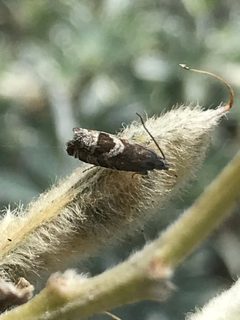
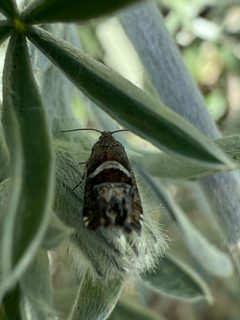
As a member of Grapholita, G. edwardsiana likely exhibits the typical morphological features of the : small size (wingspan approximately 10-15 mm), narrow forewings with a somewhat pointed apex, and relatively broad hindwings. Grapholita often display characteristic wing patterns including bands, spots, or reticulated markings in shades of brown, gray, or reddish-brown. Specific identification to species level requires examination of genitalia structures, particularly the male valvae and female sterigma, which show diagnostic differences among closely related species. The species may be distinguished from other Grapholita by plant association and geographic distribution.
Images
Habitat
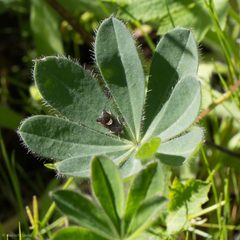
Based on the "San Francisco Tree Lupine ," this is associated with tree lupine (Lupinus arboreus and related species), which grows in coastal scrub, dune systems, and disturbed along the Pacific coast of North America. The habitat likely includes coastal areas of California and possibly Oregon, where tree lupine forms dense shrubby stands in sandy soils.
Distribution
The appears to be restricted to the Pacific coastal region of North America, specifically associated with the San Francisco Bay area and surrounding coastal regions of California, based on its . The distribution likely extends along the California coast where its plant, tree lupine, occurs naturally.
Diet
Larvae of Grapholita typically feed internally within seeds, buds, or stems of their plants. Based on the , G. edwardsiana larvae likely feed on the seeds or reproductive structures of tree lupine (Lupinus spp.), a leguminous shrub. The feeding habit is probably endophytic, with larvae developing inside lupine pods or flower buds.
Host Associations
- Lupinus arboreus - larval plantTree lupine, the likely primary based on
Life Cycle
As a tortricid , G. edwardsiana likely has a complete with , larva, pupa, and stages. The larval stage is probably the form, with occurring in spring and adult in late spring to summer. Adults are likely and attracted to light.
Ecological Role
As a seed-feeding on lupines, this likely functions as a natural regulator of its plant, potentially influencing lupine seed set and distribution. It may serve as prey for and other natural enemies in coastal .
Human Relevance
The has limited direct economic importance. Tree lupine is sometimes used in restoration plantings and as an ornamental, so heavy could potentially impact these uses. However, the is likely not a significant pest due to the limited commercial of tree lupine. The species contributes to biodiversity documentation and may be of interest for conservation of native coastal .
Similar Taxa
- Grapholita delineanaAnother Grapholita associated with legumes; G. delineana is known as the Eurasian hemp borer and feeds on Cannabis and related plants, differing in preference and geographic distribution (Palearctic origin)
- Grapholita prunivoraLesser Appleworm Moth, a related in the same that feeds on Rosaceae fruits rather than legumes; can be distinguished by association and wing pattern
- Grapholita interstinctanaClover Seed , another legume-feeding Grapholita that may overlap in ; distinguished by specific plant preferences and morphological details
More Details
Taxonomic Notes
The was originally described by Kearfott in 1907. The Grapholita has undergone significant taxonomic revision, and some species have been moved to related genera such as Cydia or Dichrorampha. The placement of G. edwardsiana within Grapholita appears stable based on current classifications.
Conservation Status
The conservation status of this has not been formally assessed. Its association with coastal lupine may make it vulnerable to habitat loss from coastal development and plant management that targets tree lupine, which is considered invasive in some areas outside its native range.
Sources and further reading
- BugGuide
- GBIF taxonomy match
- iNaturalist taxon
- NCBI Taxonomy
- Catalogue of Life
- Like a Moth to a Flame: Moth Night at Bohart Museum of Entomology | Bug Squad
- Publications | Entomology Research Museum
- Bohart Museum of Entomology: One Busy Place! | Bug Squad
- Scarab Beetles First to Arrive at UC Davis 'Moth Night' | Bug Squad
- Grapholita delineana Archives - Entomology Today
- IPM in Hemp: Managing Pests in a "New" Crop