
Grapholita delineana
Walker, 1863
Eurasian hemp moth, hemp moth, hemp borer
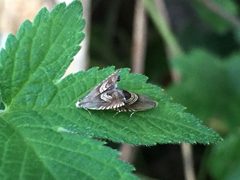
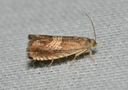
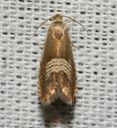
Grapholita delineana, commonly known as the Eurasian hemp or hemp borer, is a tortricid moth in the Tortricidae. It has emerged as a significant economic pest of hemp (Cannabis sativa) in the United States following the crop's legalization for commercial production. The species is native to Eurasia but has established in North America where it can cause substantial damage to hemp crops, particularly those grown for cannabidiol (CBD) production.
Pronunciation
How to pronounce Grapholita delineana: /ɡræfɒˈliːtə dɪˌlɪniˈɑːnə/
These audio files are automatically generated. While they are not always 100% accurate, they are a good starting point.
Images
Distribution
Native to Eurasia with established in North America. Distribution records from GBIF include Austria, Bosnia-Herzegovina, Bulgaria (rare), and Czech Republic. The has been observed in hemp production regions of the United States following the crop's legalization.
Diet
Larvae feed on hemp (Cannabis sativa), boring into stems and causing damage to the crop. The has been identified as a pest capable of causing economic loss to hemp growers.
Host Associations
- Cannabis sativa - primary Hemp; larvae bore into stems causing economic damage to crops grown for grain, fiber, and CBD production
Human Relevance
Identified as an economically significant pest of hemp in the United States. Can cause crop losses in hemp grown for CBD, fiber, and grain. strategies for this are still being developed, with research needed on cultural, mechanical, and methods. No are broadly labeled for hemp pests in the U.S., creating reliance on non-chemical management approaches.
Similar Taxa
- Grapholita prunivoraCongeneric in the same , also a tortricid pest of crops (Lesser Appleworm Moth)
- Cydia latiferreanaRelated tortricid (Filbertworm Moth) with similar and pest status on nut crops
More Details
Hodges Number
3443.1
Economic Impact
Research indicates this can cause economic loss for hemp growers in some U.S. regions, though and injury levels are still being developed. Concerns exist about whether larval feeding damage could potentially increase tetrahydrocannabinol (THC) production in hemp crops, which must remain below 0.3% dry weight.
Management Status
plans specifically for Grapholita delineana remain in early development. Some states have allowed limited use of such as Bacillus thuringiensis var. aizawai, but regulatory status varies by jurisdiction.
Sources and further reading
- BugGuide
- Wikipedia
- GBIF taxonomy match
- iNaturalist taxon
- NCBI Taxonomy
- Catalogue of Life
- Like a Moth to a Flame: Moth Night at Bohart Museum of Entomology | Bug Squad
- Bohart Museum of Entomology: One Busy Place! | Bug Squad
- Scarab Beetles First to Arrive at UC Davis 'Moth Night' | Bug Squad
- IPM in Hemp: Managing Pests in a "New" Crop
- Grapholita delineana Archives - Entomology Today