
Cydia
Hübner, [1825], 1816
Species Guides
36- Cydia albimaculana(White-marked Cydia)
- Cydia americana
- Cydia anaranjada(slash pine seedworm moth)
- Cydia bracteatana
- Cydia candana
- Cydia caryana(Hickory Shuckworm Moth)
- Cydia colorana
- Cydia confusana
- Cydia cupressana(Cypress bark moth)
Cydia is a large of tortrix moths in the Tortricidae, Olethreutinae, and tribe Grapholitini. The genus includes numerous economically significant agricultural pests, most notably the (C. pomonella), a global pest of apple and pear orchards, and the plum fruit (C. funebrana). in this genus are characterized by their fruit-feeding larval habits, with many mining into or boring through fruits of cultivated trees. The genus name was adopted for the iOS software platform Cydia, referencing the codling moth's association with apples.
Pronunciation
How to pronounce Cydia: //ˈsɪdiə//
These audio files are automatically generated. While they are not always 100% accurate, they are a good starting point.
Identification
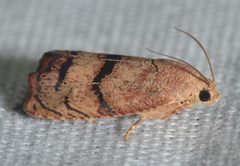
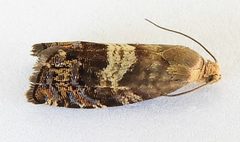
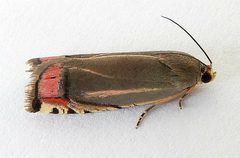
Cydia are small to medium-sized tortricid moths with wingspans typically in the 10-20 mm range. They generally exhibit muted coloration—browns, grays, and ochres—with variable wing patterns that often include distinct bands or mottling. Accurate species identification within Cydia typically requires examination of male genitalia structure, as external is often insufficient. The is distinguished from the related genus Grapholita (the type genus of tribe Grapholitini) by subtle morphological differences that remain under taxonomic study; definitive delimitation between these genera requires further research.
Images
Habitat
in this are primarily associated with orchards, fruit plantations, and areas where their trees occur naturally or in . The (C. pomonella) inhabits apple and pear orchards globally. The plum fruit (C. funebrana) occurs in plum plantations. Larval stages are found within fruits, while are and attracted to light sources.
Distribution
The has a wide distribution with records from Europe (including Denmark, Norway, Sweden, Germany), North America (including Vermont, USA), and globally wherever cultivated fruit trees are grown. Individual distributions vary: C. pomonella is in apple-growing regions worldwide; C. funebrana is documented from European plum-growing areas including Germany; C. latiferreana (filbertworm) occurs in western North America.
Seasonality
activity periods vary by and latitude. In temperate regions, C. pomonella typically has 1-3 per year with adult from late spring through summer. C. funebrana adults have been observed with lifespans of 6-15 days for females and 5-9 days for males during the growing season.
Diet
Larvae of Cydia are internal feeders in fruits. C. pomonella larvae bore into apples and pears, feeding on seeds and fruit flesh. C. funebrana larvae mine within plum fruits. C. latiferreana larvae feed within hazelnuts and filberts. do not feed; they rely on larval energy reserves.
Host Associations
- Malus domestica - larval apple; primary of C. pomonella
- Pyrus spp. - larval pear; of C. pomonella
- Prunus domestica - larval plum; of C. funebrana
- Corylus avellana - larval hazelnut/filbert; of C. latiferreana
- Punica granatum - larval pomegranate; of C. latiferreana
Life Cycle
Development includes , larva, pupa, and stages. Eggs undergo three visible embryonic stages: milky, red ring, and black . Larvae are the destructive stage, mining into or boring through fruits. Larval development includes variable numbers of instars; C. funebrana larvae possess anal combs with 2-7 prongs (most commonly 4 or 6). typically occurs in soil, under bark, or in leaf litter. Adult lifespan is relatively short: 6-15 days for females, 5-9 days for males in C. funebrana.
Behavior
are and strongly attracted to ultraviolet light sources, making them readily collected at blacklighting stations. Males are attracted to female ; synthetic are widely used for monitoring and in . Males exhibit random patterns when seeking pheromone sources, with limited ability to detect plumes beyond short distances (approximately 5 meters for C. pomonella). Larvae display cryptic , feeding concealed within fruits.
Ecological Role
As fruit feeders, Cydia larvae function as primary consumers in orchard . High natural larval mortality occurs during the mining stage (mean 78.1% in C. funebrana). Larvae serve as for , particularly Braconidae and Ichneumonidae, which provide natural (11.5-21.2% parasitization rates observed). The represents a significant nexus of agricultural pest pressure and biological control potential.
Human Relevance
Multiple Cydia are major economic pests of global agriculture. C. pomonella () is one of the most destructive pests of apple and pear production worldwide, causing fruit damage and quality loss. C. funebrana damages plum crops. C. latiferreana is a pest of hazelnuts and pomegranates. Management relies heavily on -based monitoring, , and applications. Research on C. pomonella has advanced understanding of insect olfaction, pheromone , and gene function (notably the CpomOR1 odorant receptor gene). The name was adopted for the iOS jailbreak software platform Cydia, referencing the codling moth's association with apples.
Similar Taxa
- GrapholitaType of tribe Grapholitini; Cydia and Grapholita are closely related and their definitive delimitation requires further taxonomic study. Both genera contain economically important fruit-feeding tortricid pests with similar and .
- EphestiaPyralid moths with similar size and dull coloration; attracted to same blacklighting setups. Distinguished by -level characters: Tortricidae (Cydia) versus Pyralidae (Ephestia), and by larval habits—Ephestia typically infest stored products rather than fresh fruits.
More Details
Taxonomic Uncertainty
The distinctness of Cydia from Grapholita and precise boundaries between these within tribe Grapholitini remain unresolved and require further phylogenetic and morphological study.
Research Significance
C. pomonella serves as a model organism for studies of insect chemical , reception, and gene editing in Lepidoptera. CRISPR/Cas9 editing of the CpomOR1 gene revealed unexpected roles in female production and viability, advancing understanding of odorant receptor function beyond olfaction.
Sources and further reading
- BugGuide
- Wikipedia
- GBIF taxonomy match
- iNaturalist taxon
- NCBI Taxonomy
- Catalogue of Life
- Blacklighting at the Bohart: They Saw the Light | Bug Squad
- What Will You See at Bohart Museum Open House | Bug Squad
- Like a Moth to a Flame: Moth Night at Bohart Museum of Entomology | Bug Squad
- Oh, What a (Moth) Night! | Bug Squad
- Line Trapping: A Promising Method for More Accurate Pest Monitoring
- Odorant Receptor Gene in Codling Moth Also Affects Egg Production
- Beobachtungen zur Lebensweise des Pflaumenwicklers (Cydia funebrana) (Observations on the Biology of the Plum Fruit Moth (Cydia funebrana))