
Alysiini
Genus Guides
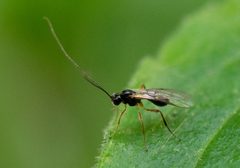
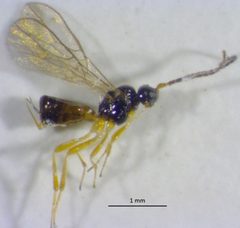
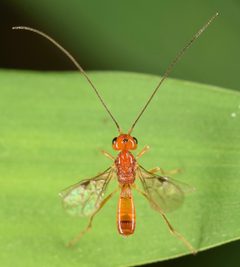
14Alysiini is a tribe of koinobiont endoparasitoid within the Alysiinae (Braconidae). Members are characterized by a distinctive exodont condition—the only group of Braconidae with mandibles that open outward rather than downward. The tribe includes approximately 16 in the Dapsilarthra genus group and numerous other genera globally, with substantial faunas in Europe (over 400 in related Dacnusini) and Australia (14 genera). associations are primarily with cyclorrhaphan Diptera, including leaf-mining Agromyzidae, fungus-inhabiting flies, and gall-forming Chloropidae.
Pronunciation
How to pronounce Alysiini: /ˌælɪˈsaɪɪnaɪ/
These audio files are automatically generated. While they are not always 100% accurate, they are a good starting point.
Identification
Distinguished from other Alysiinae by exodont that open laterally rather than ventrally. The Dapsilarthra group, previously associated with Mesocrina, has been revised; Mesocrina is now excluded from this group based on biological and molecular evidence. Australian genera include Aphaereta, Aspilota, Cratospila, Dinotrema, Idiasta, Leptolarthra, Orthostigma, Phaenocarpa, and Tanycarpa, with keys available for identification.
Images
Habitat
reflect : parasitize hosts in fungal fruiting bodies, leaf mines, and plant galls. Mesocrina species are specifically associated with fungi hosting cyclorrhaphan Diptera.
Distribution
distribution with documented faunas in Europe, the Holarctic region (including North America), Australia, and New Guinea. European checklists document extensive ; Australian revision records 14 with eight newly recorded for that region.
Host Associations
- Diptera: Agromyzidae - leaf-mining , inferred from literature on Dacnusa sibirica and related
- Diptera: Chloropidae - gall-inhabiting flies in Lipara galls, inferred from literature references
- cyclorrhaphan Diptera in fungi - confirmed for Mesocrina; previous records from phytophagous insects are incorrect
- Heleomyzidae - Heleomyzophaga collessi reared from heleomyzid fly (Australian )
- Platypezidae - Dinotrema monstrosum reared from platypezid fly (Australian )
Life Cycle
Koinobiont endoparasitoid development; larvae develop within living , emerging to pupate externally. Specific developmental details vary by and host association.
Ecological Role
agents of dipteran . of leaf miners, gall-forming flies, and fungus-inhabiting flies, regulating populations of these herbivores and .
Human Relevance
Potential value in of pest Diptera, particularly leaf-mining Agromyzidae in agricultural and horticultural systems. Taxonomic revisions and efforts (30% of European barcoded) support identification and biodiversity assessment.
Similar Taxa
- DacnusiniSister tribe within Alysiinae; distinguished by different structure and associations. European Dacnusini includes 426+ with extensive leaf-miner records.
- Mesocrina (excluded from Dapsilarthra group)Formerly placed in Dapsilarthra group of Alysiini, but excluded based on biological evidence (fungus-dwelling vs. plant-associated hosts) and molecular data (10% CO1 divergence from other European ).
Misconceptions
Mesocrina was historically misplaced in the Dapsilarthra group of Alysiini; this classification is erroneous. Previous records suggesting Mesocrina parasitizes phytophagous insects are incorrect—the genus specifically parasitizes cyclorrhaphan Diptera in fungi.
More Details
Taxonomic Revisions
Australian Alysiini revised with 49 described (43 new), including two new (Heleomyzophaga, Hovhoa) and two new subgenera. Nomenclatural changes include synonymization of Acrobela with Tanycarpa, Idiolexis with Phaenocarpa, and Eudinostigma with Dinotrema; Neorthostigma and Patriaspilota treated as subgenera of Orthostigma.
Molecular Data
available for approximately 30% of European and 50% of British species, with BIN references provided in recent checklists. Mesocrina shows substantial interspecific divergence (5-10% CO1) supporting species boundaries.
Sources and further reading
- BugGuide
- iNaturalist taxon
- Revision of the Australian Alysiini (Hymenoptera : Braconidae)
- Annotated Checklist of the European Dacnusini and the Dapsilarthra genus group of the Alysiini (Hymenoptera: Braconidae, Alysiinae)
- A new European species of Mesocrina (Hymenoptera, Braconidae, Alysiinae, Alysiini) with notes on the biology and systematics of the genus
- Annotated Checklist of the British Dacnusini and the Dapsilarthra genus group of the Alysiini (Hymenoptera: Braconidae, Alysiinae)
- Figure 4 from: Godfray HCJ, van Achterberg C (2024) A new European species of Mesocrina (Hymenoptera, Braconidae, Alysiinae, Alysiini) with notes on the biology and systematics of the genus. Journal of Hymenoptera Research 97: 349-361. https://doi.org/10.3897/jhr.97.124215
- Figure 1 from: Godfray HCJ, van Achterberg C (2024) A new European species of Mesocrina (Hymenoptera, Braconidae, Alysiinae, Alysiini) with notes on the biology and systematics of the genus. Journal of Hymenoptera Research 97: 349-361. https://doi.org/10.3897/jhr.97.124215
- Figure 2 from: Godfray HCJ, van Achterberg C (2024) A new European species of Mesocrina (Hymenoptera, Braconidae, Alysiinae, Alysiini) with notes on the biology and systematics of the genus. Journal of Hymenoptera Research 97: 349-361. https://doi.org/10.3897/jhr.97.124215
- Figure 3 from: Godfray HCJ, van Achterberg C (2024) A new European species of Mesocrina (Hymenoptera, Braconidae, Alysiinae, Alysiini) with notes on the biology and systematics of the genus. Journal of Hymenoptera Research 97: 349-361. https://doi.org/10.3897/jhr.97.124215