
Dacnusini
Genus Guides
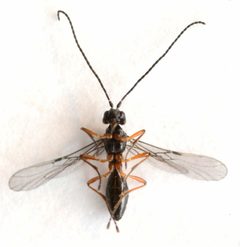
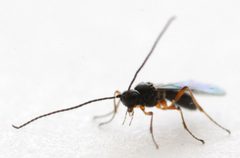
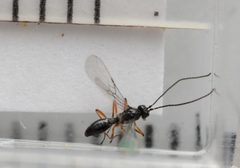
3Dacnusini is a -rich tribe within the braconid Alysiinae, comprising over 400 species in Europe alone. Members are exclusively of leaf-mining Diptera, particularly Agromyzidae, with some species associated with Chloropidae. The tribe has been subject to extensive taxonomic revision due to its morphological diversity and economic relevance in .
Pronunciation
How to pronounce Dacnusini: /dækˈnuːsɪnaɪ/
These audio files are automatically generated. While they are not always 100% accurate, they are a good starting point.
Identification
Dacnusini can be distinguished from other Alysiinae tribes by features of the and structure, though specific characters vary by . Genera such as Chorebus, Dacnusa, and Chaenusa are recognized by combinations of facial , wing venation, and antennal segment proportions. Identification to often requires reference to specialized keys by Nixon, Griffiths, and Tobias due to the tribe's morphological complexity.
Images
Habitat
Associated with supporting their leaf-mining dipteran , including vegetation of Equisetum (horsetails) and various herbaceous plants.
Distribution
Widespread across the Palearctic with substantial representation in Europe (426+ ), China (with new Victorovita, Coloneura, Laotris recently recorded), and Australia (limited fauna with 4 genera recently added).
Host Associations
- Agromyzidae - primary leaf-mining Diptera; principal across tribe
- Liriomyza virgo - specific for Chorebus on Equisetum
- Lipara - Chloropidae (Diptera) forming galls; association documented for some
Ecological Role
of leaf-mining flies, regulating of Agromyzidae that feed on herbaceous vegetation including Equisetum.
Human Relevance
Potential agents for agromyzid pests; taxonomic complexity requires knowledge for identification.
Similar Taxa
Sources and further reading
- BugGuide
- iNaturalist taxon
- REVISION OF AUSTRALIAN DACNUSINI (HYMENOPTERA: BRACONIDAE: ALYSIINAE), PARASITOIDS OF CYCLORRHAPHOUS DIPTERA
- The Dacnusini (Hymenoptera: Braconidae) parasitoids of Agromyzidae (Diptera) feeding on Equisetum L. (Equisetaceae)
- Annotated Checklist of the European Dacnusini and the Dapsilarthra genus group of the Alysiini (Hymenoptera: Braconidae, Alysiinae)
- New Records and New Species of Dacnusini (Hymenoptera: Braconidae, Alysiinae) Based on Morphological and Molecular Evidence
- Annotated Checklist of the British Dacnusini and the Dapsilarthra genus group of the Alysiini (Hymenoptera: Braconidae, Alysiinae)