
Coelinius
Nees, 1818
Coelinius is a of in the Braconidae, first described by Nees in 1818. Members of this genus are koinobiont endoparasitoids, meaning they develop inside living without immediately killing them. The genus is part of the diverse ichneumonoid wasp fauna and contributes to of host . Records indicate presence in northern European regions.
Pronunciation
How to pronounce Coelinius: /sɛˈlɪniːəs/
These audio files are automatically generated. While they are not always 100% accurate, they are a good starting point.
Identification
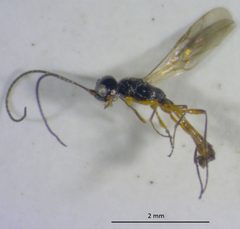
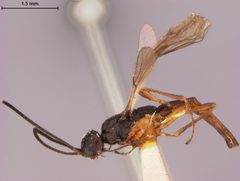
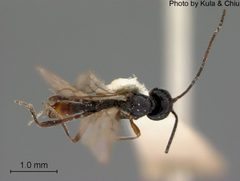
Coelinius are small to medium-sized braconid wasps. Diagnostic features at the level include characteristics of the wing venation, structure, and body proportions typical of the Braconidae . Species-level identification requires examination of morphological details such as the shape of the ovipositor , metasomal tergite sculpturing, and coloration patterns. Separation from related braconid genera depends on subtle differences in propodeal structure and forewing patterns.
Images
Distribution
Recorded from Denmark (DK), Norway (NO), and Sweden (SE). The appears to have a north temperate distribution in Europe, though this may reflect limited sampling rather than true range limits.
Ecological Role
As , members of this function as natural agents, regulating of their insects. Their koinobiont lifestyle allows them to exploit hosts through extended developmental periods.
Similar Taxa
- Other Braconidae generaCoelinius shares the general braconid body plan and wing venation with numerous related ; precise differentiation requires examination of morphological characters.
More Details
Taxonomic note
The Coelinius was established by Christian Gottfried Daniel Nees von Esenbeck in 1818. It belongs to the Braconinae based on morphological characteristics, though some classifications may vary. The genus remains poorly studied with limited -level revisions.