
Nysson
Latreille, 1802
Species Guides
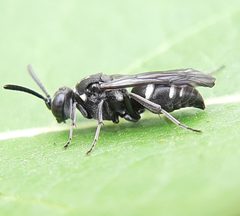
9Nysson is a Holarctic of kleptoparasitic in the Crabronidae. Over 100 are known. These wasps are obligate kleptoparasites, meaning females exploit the food caches of other solitary wasps by locating burrows, digging them open, destroying the host , and replacing it with their own. The larva then consumes the prey provisioned by the host mother.


Pronunciation
How to pronounce Nysson: //ˈnɪs.sɒn//
These audio files are automatically generated. While they are not always 100% accurate, they are a good starting point.
Identification
Nysson can be recognized as kleptoparasitic crabronids, though specific identification to requires examination of external genitalia. They are generally small to medium-sized wasps. The is part of the tribe Nyssonini within Bembicinae.
Images
Distribution
Holarctic distribution, occurring across North America, Europe, and Asia. European include Nysson alicantinus, N. bohemicus, N. castellanus, N. chevrieri, N. dimidiatus, N. dusmeti, N. fraternus, N. fulvipes, N. ganglbaueri, N. gerstaeckeri, N. hrubanti, N. ibericus, N. interruptus, N. kolazyi, N. konowi, N. lapillus, N. laufferi, N. maculosus, N. miegi, N. mimulus, N. niger, N. parietalis, N. pratensis, N. pusillus, N. quadriguttatus, N. roubali, N. ruthenicus, N. spinosus, N. susterai, N. tridens, N. trimaculatus, N. varelai, N. variabilis, N. decemmaculatus, N. epeoliformis, N. militaris, and N. monachus. North American species include N. aequalis, N. argenticus, N. aridulus, N. bakeri, N. chumash, N. compactus, N. euphorbiae, N. fidelis, N. gagates, N. hesperus, N. intermedius, N. lateralis, N. neorusticus, N. plagiatus, N. pumilus, N. recticornis, N. rufoflavus, N. rusticus, N. subtilis, N. timberlakei, N. tristis, and others.
Diet
Kleptoparasitic; larvae feed on prey provisioned by . have been observed feeding on honeydew from colonies.
Host Associations
- Hoplisoides - kleptoparasiteNysson parasitize nests of Hoplisoides, which provision with paralyzed treehoppers (Membracidae).
- Bicyrtes - kleptoparasiteNysson parasitize nests of Bicyrtes, which provision with paralyzed true bugs (Heteroptera).
- Stizus - kleptoparasiteNysson parasitize nests of Stizus.
- Bembix - kleptoparasiteNysson parasitize nests of Bembix.
Life Cycle
Females locate closed burrows of , dig them open, destroy the host , and replace it with one of their own. The larva hatches and consumes the food provisioned by the host mother. Multiple individual nests are typically made by each female during her lifetime.
Behavior
Kleptoparasitic involves locating nests through observation or chemical cues. Females are active hunters of host nests rather than prey. They do not construct their own nests or provision their own .
Ecological Role
Kleptoparasite of solitary ; regulator of wasp . By parasitizing nests of predatory wasps like Hoplisoides and Bicyrtes, they indirectly influence populations of treehoppers and true bugs that are preyed upon by those hosts.