
Epinysson
Pate, 1935
Species Guides
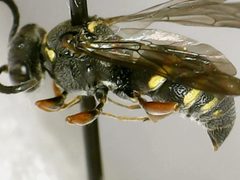
4Epinysson is a of kleptoparasitic in the Crabronidae ( Bembicinae). First described by Pate in 1935, the genus contains more than 20 described . These wasps are known for their parasitic lifestyle, exploiting the nests of other wasp species to rear their own offspring. The genus is classified within the tribe Nyssonini and subtribe Nyssonina.
Pronunciation
How to pronounce Epinysson: /ˌɛpɪˈnɪsən/
These audio files are automatically generated. While they are not always 100% accurate, they are a good starting point.
Identification
Epinysson are distinguished from other nyssonine by their kleptoparasitic and associated morphological adaptations. Species within this can be identified to level by examining specific combinations of clypeal, pronotal, and abdominal characteristics described in taxonomic revisions. The genus is most readily separated from the closely related Nysson by subtle differences in facial and male genitalia structure. Accurate identification to species level requires reference to original descriptions and taxonomic keys.
Images
Distribution
of Epinysson are known from North and Central America, with records from the southwestern United States through Mexico to Guatemala. Specific distribution varies by species; for example, Epinysson arentis, E. basilaris, E. bellus, E. moestus, and E. torridus are documented from the United States and Mexico, while E. guatemalensis hoplisivora extends the range into Guatemala.
Host Associations
- Other wasps - kleptoparasiteEpinysson are kleptoparasites that exploit the prey provisions of nests. The specific host associations for most Epinysson species have not been documented in detail, though the subtribe Nyssonina to which Epinysson belongs is known to parasitize nests of various Crabronidae, particularly species that hunt Orthoptera or other insects as prey for their larvae.
Behavior
Epinysson exhibit kleptoparasitic , meaning females enter the nests of other species to lay on prey items provisioned by the . The developing Epinysson larva consumes the host's food store rather than the host larva itself. This behavior reduces the host's reproductive success while requiring minimal from the . The specific behavioral details of host location, nest entry, and oviposition timing remain poorly documented for most species in this .
Ecological Role
As kleptoparasites, Epinysson function as natural enemies of other solitary , potentially influencing and nest-site availability. Their presence may exert on host species to evolve defensive such as nest guarding or concealment. The contributes to the diversity of parasitic strategies within the Crabronidae and represents one of several independent origins of kleptoparasitism within the .
Similar Taxa
- NyssonNysson is the most closely related within the same subtribe Nyssonina and shares similar kleptoparasitic . Epinysson can be distinguished by differences in facial , particularly the clypeal structure, and by male genitalia . of both genera are similar in general body form and coloration, requiring careful examination for accurate separation.
- ZanyssonZanysson is another in the subtribe Nyssonina with comparable kleptoparasitic habits. Epinysson generally differ in details of thoracic and abdominal tergite structure. Both genera occupy similar geographic ranges in North America, increasing the potential for misidentification in field collections.
More Details
Taxonomic History
Epinysson was established by Pate in 1935 as part of a broader revision of the Nyssoninae. The has been classified in Bembicidae (as Nyssonidae) in older literature, but modern treatments place it in Crabronidae Bembicinae following phylogenetic revisions of the superfamily . The subtribal placement in Nyssonina reflects its close relationship to Nysson and Zanysson.
Collection Records
The UCR Entomology Research Museum holds determined specimens of multiple Epinysson including E. arentis, E. basilaris (including the E. b. basilaris and E. basilaris tuberculatus), E. bellus, E. guatemalensis hoplisivora, E. moestus, and E. torridus, indicating sustained research interest in this in southwestern North America.