
Zanysson
Rohwer, 1921
Species Guides
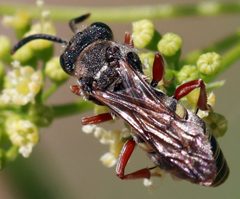
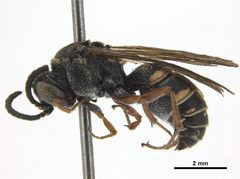
2Zanysson is a strictly New World of digger wasps in the Crabronidae, Bembicinae. The genus was established by Rohwer in 1921 and remained taxonomically stagnant for over 80 years until the description of Z. gemmatus from Colombia in 2007. Members are assumed to be of other crabronid , though direct biological observations are lacking for most . The genus includes at least three described species distributed from the southwestern United States through Mexico to northwestern South America.
Pronunciation
How to pronounce Zanysson: /ˈzænɪsɒn/
These audio files are automatically generated. While they are not always 100% accurate, they are a good starting point.
Images
Distribution
Southwestern United States (Texas, Arizona), Mexico, and northwestern Colombia. The has a strictly New World distribution with records spanning arid and tropical regions.
Host Associations
- other crabronid wasps - assumed -level inference; no direct observations documented for most
Behavior
Members of the are assumed to be of other crabronid , infiltrating nests to deposit on provisioned prey. This has not been directly observed for any Zanysson and is inferred from phylogenetic placement within the cleptoparasitic subtribe Nyssonina.
Similar Taxa
- NyssonBoth belong to subtribe Nyssonina and share assumed cleptoparasitic habits; Zanysson distinguished by structural features of the scutellum and leg pilosity patterns
- MetanyssonAnother New World nyssonine with overlapping distribution; Zanysson generally larger with more pronounced scutellar modifications
More Details
Taxonomic history
The Zanysson saw no new descriptions between 1938 and 2007, when Z. gemmatus was described from Colombia. This 69-year gap reflects both the rarity of collection and the cryptic nature of these . The type species is Z. texanus (Cresson, 1873).
Diagnostic features
Z. gemmatus is distinguished by remarkable scutellar structure and distinctive color and pilosity patterns on the legs; these features likely apply to -level but comparative studies are limited.