Epinysson mellipes
(Cresson, 1882)
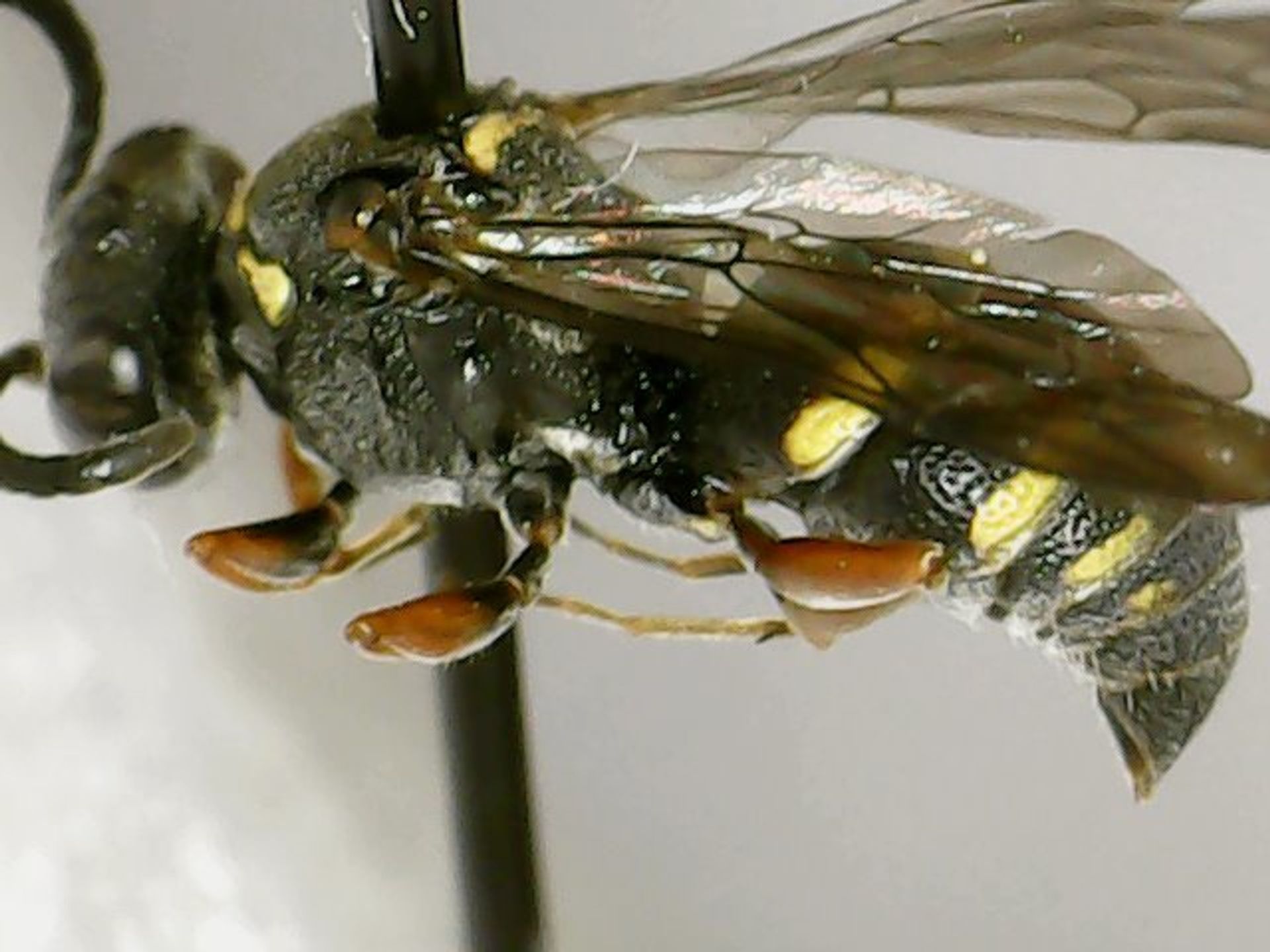
Epinysson mellipes is a solitary in the Crabronidae (formerly Bembicidae). The species was described by Cresson in 1882 and is known from North America. Like other members of the Epinysson, it is presumed to be a or associated with other wasps, though specific natural history details for this species remain poorly documented.
Pronunciation
How to pronounce Epinysson mellipes: /ɛpɪˈnɪsɔn ˈmɛlɪˌpiːz/
These audio files are automatically generated. While they are not always 100% accurate, they are a good starting point.
Identification
Members of the Epinysson can be distinguished from related genera by a combination of structural features including details of the , , and wing venation. -level identification within Epinysson typically requires examination of male genitalia and other subtle morphological characters. Without specific diagnostic information for E. mellipes, precise field identification is not feasible.
Images
Distribution
Recorded from North America, with specific locality data including Alberta, Canada. The appears to have a transcontinental or western Nearctic distribution, though precise range boundaries are undefined.
Host Associations
- Hoplisoides - presumed or Epinysson is associated with Hoplisoides and related sand wasps; specific for E. mellipes not confirmed
Ecological Role
As a member of Nyssonini, likely functions as a or of other solitary , potentially influencing of .
Similar Taxa
- Epinyssona basilarisOverlapping distribution and similar size; distinguished by male genitalia and subtle coloration differences
- Epinyssona moestusCongeneric with similar ecological habits; requires detailed morphological examination for separation
More Details
Taxonomic History
The was originally described by Ezra T. Cresson in 1882. The Epinysson was formerly placed in Bembicidae (or Nyssonidae), but modern classifications place it in Crabronidae, Bembicinae, tribe Nyssonini.
Collection Records
Specimens are held in the UCR Entomology Research Museum among curated Bembicidae holdings, with determinations attributed to R. Bohart and other .