
Hoplisoides
Gribodo, 1884
sand wasps
Species Guides
6- Hoplisoides hamatus
- Hoplisoides nebulosus(sand wasp)
- Hoplisoides punctifrons(sand wasp)
- Hoplisoides semipunctatus(sand wasp)
- Hoplisoides splendidulus
- Hoplisoides tricolor(sand wasp)
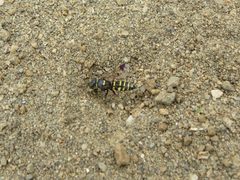
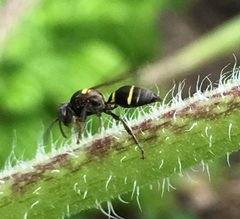
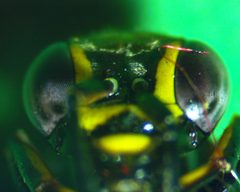
Hoplisoides is a of solitary sand wasps in the Crabronidae, containing at least 70 described worldwide. These small are characterized by their spotted wings and specialized predatory targeting treehoppers (Membracidae). Females construct short burrows in sandy soil to provision with paralyzed prey for their larvae. The genus is distributed globally except Australia, with approximately 18 species in North America.
Pronunciation
How to pronounce Hoplisoides: //hɒpˈlɪsɔɪdiːz//
These audio files are automatically generated. While they are not always 100% accurate, they are a good starting point.
Identification
Distinguished from similar sand wasps by the combination of spotted wings and small size. The splayed wing posture can cause confusion with mason wasps (Eumenidae), but Crabronidae affiliation is confirmed by other morphological features. -level identification requires examination of genitalia and other detailed characters.
Images
Appearance
Small , typically 8-10 mm in length, with distinctive spotted or maculated wings that serve as a key identifying feature. Body coloration varies by . Wings often held splayed when at rest, superficially resembling mason wasps (Eumenidae).
Habitat
Open sandy areas including vacant lots, riverbanks, and disturbed ground. Associated with supporting their prey and colonies for honeydew feeding. In North America, found from low elevations to montane areas; in Brazil, observed in southeastern regions.
Distribution
distribution excluding Australia. Approximately 18 in North America north of Mexico, with the majority being western in distribution. Present in Alaska and throughout the continental United States. Global range includes Africa, Mediterranean Europe, Middle East, India, and the Americas.
Seasonality
activity period varies by and latitude. In Colorado, observed active in July. Eastern North American species such as H. nebulosus active during summer months.
Diet
feed on honeydew from colonies. Larvae are provisioned with paralyzed treehoppers (Membracidae), primarily adult and stages. Prey includes Umbonia spinosa in Brazil. An average of 10-15 treehoppers per , varying with prey size.
Life Cycle
Solitary nesting in sandy soil. Females dig burrows descending at 45-70° angles to depths of approximately 6 cm, with terminal 9-11 mm long. Multiple cells may terminate a single burrow. Each cell receives 10-15 paralyzed treehoppers and a single laid on the final prey item. Females construct multiple nests during their lifetime. Some may require two winters for egg development.
Behavior
Females excavate burrows -first, in contrast to most burrowing that back out. They dig test holes at several locations before selecting a final nest site. Upon completion, nests are rapidly filled and concealed; the wasp performs a low orientation before departing to hunt. rarely visit flowers but frequent colonies for honeydew. Some exhibit mimicry relationships with vespid wasps and stratiomyid flies.
Ecological Role
of treehoppers (Membracidae), potentially regulating of these herbivorous insects. Serves as for kleptoparasitic including Nysson and cuckoo wasps (Elampus viridicyaneus). Also parasitized by velvet ants (Dasymutilla vesta) and satellite flies (Sarcophagidae: Senotainia trilineata).
Human Relevance
Potential biocontrol agent for pests. Of interest to entomologists and naturalists for distinctive nesting and mimicry associations. Not aggressive toward humans.
Similar Taxa
- BembixBoth are sand wasps in Bembicinae, but Bembix lacks spotted wings and typically provisions with flies rather than treehoppers
- Eumenidae (mason wasps)Similar splayed wing posture and soil-scraping , but distinguished by wing venation and other morphological features
- BicyrtesRelated sand wasps in same tribe, but Bicyrtes prey on true bugs (Heteroptera) rather than treehoppers
More Details
Nesting biology
Hoplisoides nebulosus burrows average 10 cm in length with terminal 9-11 mm long by 7-9 mm diameter. Females enter and exit -first, unlike most burrowing .
Parasite pressure
Rapid nest closure leaves Hoplisoides vulnerable to ; documented enemies include cuckoo wasps, Nysson , velvet ants, and satellite flies.
Mimicry
H. vespoides in Brazil exhibits mimicry relationships with vespid and the stratiomyid fly Hoplitimyia mutabilis.
Sources and further reading
- BugGuide
- Wikipedia
- GBIF taxonomy match
- iNaturalist taxon
- NCBI Taxonomy
- Catalogue of Life
- Bembicid Holdings | Entomology Research Museum
- Bug Eric: Wasp Wednesday: Hoplisoides nebulosus
- Bug Eric: July 2012
- Nesting behaviour and notes on mimetic relationships of Hoplisoides vespoides Smith from Brazil (Hymenoptera: Crabronidae).