
Pemphigus
Hartig, 1839
Poplar Leaf-stem Gall Aphids
Species Guides
14- Pemphigus betae(sugarbeet root aphid)
- Pemphigus bursarius(lettuce root aphid)
- Pemphigus knowltoni
- Pemphigus longicornis
- Pemphigus monophagus
- Pemphigus nortonii
- Pemphigus obesinymphae(Cherubic Poplar Petiole-gall Aphid)
- Pemphigus populicaulis(Poplar Leaf-base Gall)
- Pemphigus populiglobuli(poplar bullet gall aphid)
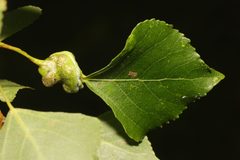
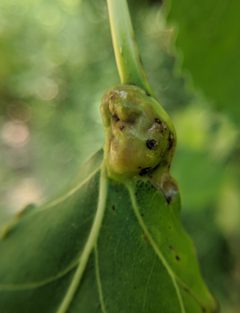
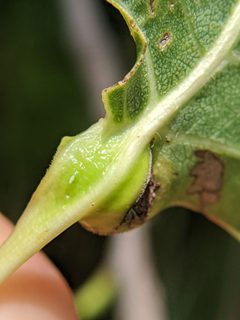
Pemphigus is a of gall-forming aphids in the Aphididae, commonly known as poplar leaf-stem gall aphids. in this genus are specialized herbivores that induce distinctive galls on poplar (Populus) and related plants. The genus is notable for its complex involving alternation between primary woody hosts and secondary herbaceous hosts, with some species remaining entirely on roots of secondary hosts. Pemphigus species are frequently confused with other root-feeding aphids in agricultural and horticultural contexts.
Pronunciation
How to pronounce Pemphigus: //ˈpɛmfɪɡəs//
These audio files are automatically generated. While they are not always 100% accurate, they are a good starting point.
Identification
Pemphigus are distinguished from other by their association with poplar galls or root-feeding habits on secondary . (winged forms) have characteristic wing venation typical of the tribe Fordini. The galls induced on poplar petioles or leaf stems are often species-specific in shape and location, providing diagnostic features. Root-feeding forms are morphologically reduced and difficult to distinguish from other root aphids without molecular or host-association data. Unlike free-living aphids such as Rhopalosiphum, Pemphigus species are typically enclosed within plant tissue (galls or roots) for most of their .
Images
Habitat
occur on primary in the Populus (poplars, aspens, cottonwoods), where they induce galls on leaf petioles or stems. Secondary host include roots of various herbaceous plants in such as Brassicaceae, Chenopodiaceae, and others. Some have adapted to persist year-round on root systems without returning to primary hosts.
Distribution
Holarctic distribution with records from North America and Europe. GBIF indicates presence in Norway and Sweden; broader distribution across temperate regions where Populus occur.
Diet
Phloem-feeding herbivores. feed on vascular sap of plants through .
Host Associations
- Populus - primary Gall formation on petioles and leaf stems
- Brassicaceae - secondary Root-feeding on herbaceous
- Chenopodiaceae - secondary Root-feeding on herbaceous
Behavior
Gall induction on primary involves chemical manipulation of plant growth to create enclosed feeding chambers. between primary and secondary hosts occurs via (winged) forms. Some or have lost the sexual phase and primary host association, persisting parthenogenetically on roots.
Ecological Role
As gall-formers, modify plant architecture and resource allocation, potentially affecting poplar growth. Root-feeding forms may influence plant composition through host-specific herbivory. Serve as food source for specialized and within gall communities.
Human Relevance
Occasionally reported as pests in agricultural contexts when misidentified as other root . Internet sources frequently confuse Pemphigus root aphids with rice root aphid (Rhopalosiphum rufiabdominale) and other root-feeding pests, leading to incorrect management recommendations.
Similar Taxa
- Rhopalosiphum rufiabdominaleBoth include root-feeding forms; distinguished by associations and gall-forming on Populus in Pemphigus versus cereal/cannabis roots in Rhopalosiphum
- PhylloxeraBoth are gall-forming Sternorrhyncha; distinguished by -level characters and specificity (Vitaceae for Phylloxera)
- GeoicaRelated Fordini with similar ; distinguished by gall and associations
Misconceptions
The name Pemphigus is homonymous with the human autoimmune pemphigus (blistering skin conditions), creating frequent confusion in literature searches. Additionally, Pemphigus root aphids are often misidentified in online resources as grape phylloxera or rice root aphid due to similar cryptic root-feeding habits.
Sources and further reading
- BugGuide
- Wikipedia
- GBIF taxonomy match
- iNaturalist taxon
- NCBI Taxonomy
- Catalogue of Life
- Rice Root Aphid: An Insect Surprise on Indoor-Grown Cannabis
- Fig. 2. Distribution of patients with bullous dermatoses by diagnosis. ВП, vulgar pemphigus; ВегП, vegetative pemphigus; ЛП, leaf-shaped pemphigus; ПНП, paraneoplastic pemphigus; БП, bullous pemphigoid; ССД/ТЭН, Stevens-Johnson syndrome / toxic epidermal necrolysis.
- Fig. 3. Distribution of patients with bullous dermatoses and groups of healthy volunteers by gender (bar chart). ВП, vulgar pemphigus; ЛП, leaf-shaped pemphigus; ПНП, paraneoplastic pemphigus; ВегП, vegetative pemphigus; БП, bullous pemphigoid; ССД/ТЭН, Stevens-Johnson syndrome / toxic epidermal necrolysis.
- Neonatal pemphigus vulgaris associated with mild oral pemphigus vulgaris in the mother during pregnancy
- Extensive cutaneous involvement in pemphigus vulgaris in a pediatric patient: a rare clinical image.