
Tropidosteptes
Uhler, 1878
ash plant bugs
Species Guides
13Tropidosteptes is a of plant bugs (Miridae) containing at least 30 described . The genus is best known from T. chapingoensis, the ash plant bug, which has been studied in detail for its and impact on urban ash trees. Species in this genus are associated with Fraxinus (ash) trees and can cause significant defoliation damage. The genus occurs in North America, with at least one species introduced to South America.
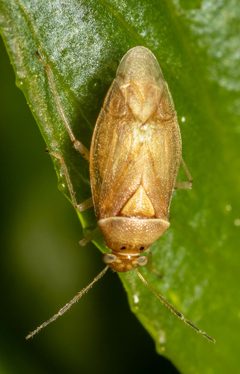
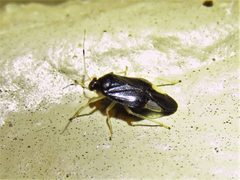
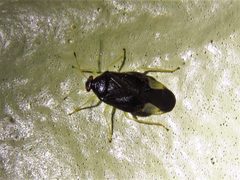
Pronunciation
How to pronounce Tropidosteptes: //ˌtrɒpɪdoʊˈstɛptiːz//
These audio files are automatically generated. While they are not always 100% accurate, they are a good starting point.
Identification
-level identification requires examination of morphometric characters including antennal segment lengths, tibia length, and pronotal dimensions. For T. chapingoensis specifically: are small (females 3.71 mm, males 3.52 mm excluding wings and ), with bright green coloration in nymphal stages. Nymphs develop through five instars with progressively larger wing pads appearing from the third instar onward. are elongated, greenish-transparent when fresh with a dark , deposited within leaf tissue.
Images
Habitat
Urban and suburban environments; specifically associated with ash trees (Fraxinus spp.). In Mexico, found on potted and established Fraxinus uhdei; in Colombia, on Fraxinus chinensis. Activity continues year-round with overlapping , decreasing only when trees are leafless.
Distribution
North America: documented in Canada (Ontario, Quebec), USA (multiple states including Vermont), and Mexico (Distrito Federal, Estado de México, Hidalgo, Michoacán, Puebla, Querétaro, Tlaxcala). Introduced to South America: established in Bogotá, Colombia.
Seasonality
Overlapping throughout the year in suitable climates. Activity decreases during leafless periods of trees. In Chapingo, Mexico, field observations recorded activity from May through September and December 1998, April through June 1999.
Diet
Phytophagous; feeds on leaf tissue of ash trees (Fraxinus spp.). Feeding causes wounds on leaf where are subsequently deposited. Damage includes yellowing foliage and premature leaf fall.
Host Associations
- Fraxinus uhdei - primary in Mexico
- Fraxinus chinensis - in Colombia
Life Cycle
Five nymphal instars. Complete cycle averages 53.3 days at 20-27.5°C under natural light. Instar durations: I (4.6 days), II (3 days), III (3 days), IV (3.3 days), V (2.6 days). stage precedes nymphal development. emerge after final . Overlapping enable continuous .
Behavior
Oviposition occurs in wounds created on leaf during feeding. deposited singly or in groups within leaf vein tissue. Causes severe defoliation capable of complete leaf loss on trees. in Mexico and Colombia show greater damage severity than North American populations.
Ecological Role
Pest causing significant deterioration of urban ash tree . Represents 19% of urban tree species in Mexico City. Serves as for natural enemies including predatory lacewings (Chrysoperla sp.) and (Erythmelus sp.).
Human Relevance
Economic pest of ornamental and urban ash trees. Causes aesthetic damage through defoliation and premature leaf fall. Subject to research, with Erythmelus sp. identified as having potential for .
Similar Taxa
- Other Miridae genera associated with FraxinusShared association requires morphological examination for differentiation; Tropidosteptes distinguished by specific antennal and leg proportions
More Details
Population Variation
Morphometric comparison of Mexican and Colombian T. chapingoensis found statistically significant differences (α≤0.05) in tibia length and antennal segment proportions, suggesting cryptic diversity or local despite identification as .
Natural Enemies
Two entomophagous documented: Chrysoperla sp. (Neuroptera: Chrysopidae) as nymph , and Erythmelus sp. (Hymenoptera: Mymaridae) as . The parasitoid appears more -specific and shows greater potential as a regulator.