
Dendroctonus pseudotsugae
Hopkins, 1905
Douglas-fir beetle, Douglas fir beetle
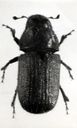
The () is a bark beetle native to western North America and a major pest of Douglas-fir (Pseudotsuga menziesii). are small (4.4–7 mm), light brown when young, darkening to brown or black with reddish wing covers. typically follow disturbances such as storms, fire, or drought, which provide stressed or dead trees. The has one of the most thoroughly studied systems among bark beetles, with operational use of its antiaggregation pheromone (MCH) to protect high-value trees developed over 40 years of research. The also infests downed western larch (Larix occidentalis), though do not survive in live larch due to high 3-carene content.
Pronunciation
How to pronounce Dendroctonus pseudotsugae: //dɛnˈdrɒktənəs ˌsjuː.doʊˈtsuː.ɡi//
These audio files are automatically generated. While they are not always 100% accurate, they are a good starting point.
Identification
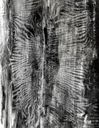
range 4.4–7 mm in length and are somewhat hairy. Coloration shifts from light brown in young adults to dark brown or black with reddish wing covers in mature individuals. Larvae are small, legless, white, and rice-grain sized. Pupae are white to cream colored. Visible signs include orange to reddish-brown boring dust in bark crevices or at the tree base, resin streamers from higher attacks, and 6–30 inch galleries running parallel to wood grain beneath the bark. Eggs are laid on either side of the gallery; hatched larvae mine perpendicular to the galleries.
Images
Habitat
Forests dominated by Douglas-fir (Pseudotsuga menziesii) throughout western North America. are associated with freshly windthrown or cut trees, fire-damaged stands, root rot, overcrowding, foliar insect damage, and drought-stressed trees. The occasionally colonizes western larch (Larix occidentalis) in proximity to Douglas-fir, though survival in live larch is prevented by chemical defenses.
Distribution
Western North America from Canada (British Columbia, Alberta) through the United States (Washington, Oregon, California, Idaho, Montana, Wyoming, Nevada, Utah, Colorado, Arizona, New Mexico, Texas) to Mexico.
Diet
Phloem of Douglas-fir (Pseudotsuga menziesii). and larvae feed on the nutrient-conducting tissue beneath the bark.
Host Associations
- Pseudotsuga menziesii - primary Douglas-fir; sole supporting successful in live trees
- Larix occidentalis - secondary Western larch; colonized when in proximity to Douglas-fir but do not survive in live trees due to high 3-carene content
Life Cycle
are laid in galleries beneath the bark of trees. Larvae hatch and mine perpendicular to egg galleries, feeding on phloem. occurs in chambers within the bark. emerge to disperse and locate new hosts. Under favorable conditions, parent females may produce sibling —second or third clutches laid later in the season that overwinter and complete development the following spring.
Behavior
Newly emerged exhibit temperature and light preferences that shift with physiological state: initially photopositive and preferring temperatures near thresholds, becoming more photonegative and -positive after conditioning, aging, or flight. Females initiate host and produce that attract both sexes. Males stridulate and release an antiaggregation pheromone (3-methylcyclohex-2-en-1-one, or MCH) after mating, which signals tree saturation and redirects late-arriving beetles to alternative hosts. The also releases limonene during stridulation-induced pheromone emission. Host selection involves initial attraction to oleoresin volatiles (α-pinene, camphene, limonene) from stressed or damaged trees, followed by stronger secondary attraction to female-produced aggregation pheromones.
Ecological Role
Functions as a disturbance agent in western forest , preferentially thinning weakened or stressed Douglas-fir trees. During , increases can lead to mass attacks that kill healthy, mature trees including remnant old-growth specimens. The contributes to nutrient cycling through phloem consumption and wood decomposition, though outbreak- mortality alters stand structure and patterns.
Human Relevance
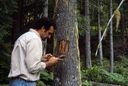
Major economic pest of Douglas-fir timber resources. cause substantial timber loss and threaten high-value trees in campgrounds, residential areas, and special-use sites. Management relies heavily on the antiaggregation MCH (3-methylcyclohex-2-en-1-one), applied via bubble capsules to protect individual trees or stands—currently the most effective operational pheromone-based bark beetle treatment globally. Historical suppression methods included harvesting of infested material. Climate change and altered forest conditions may influence outbreak dynamics and geographic range.
Similar Taxa
- Dendroctonus frontalisSouthern pine ; similar bark beetle and gallery construction, but restricted to eastern North American pines, smaller size, and distinct chemistry including frontalin and exo-brevicomin
- Dendroctonus simplexEastern larch beetle; attacks tamarack (Larix laricina) in northeastern North America, similar size range and but distinct and geographic range
- Dendroctonus terebransBlack turpentine beetle; colonizes lower trunk of pines in eastern North America, larger size (5–8 mm), does not kill trees outright, and produces that may attract D. frontalis
- Dendroctonus brevicomisWestern pine beetle; similar western North American range and Douglas-fir association, but distinguished by gallery pattern and components
- Ips spp.Engraver beetles; co-occur in conifer forests but have multiple spines on declivity ( slope of ), different gallery patterns (H- or I-shaped), and typically attack smaller diameter material or tree tops
Sources and further reading
- BugGuide
- Wikipedia
- GBIF taxonomy match
- iNaturalist taxon
- NCBI Taxonomy
- Catalogue of Life
- The Day That The Beetles Invaded the Bohart | Bug Squad
- Publications | Entomology Research Museum
- Pheromone Treatment Puts Up the "No Vacancy" Sign for Douglas-Fir Beetles
- Southern Pine Beetle: How a Fellow Species May Help in Host Location
- Managing Southern Pine Beetle Infestations in a Changing Forest Environment
- Eastern Larch Beetle Outbreak Keeps Going When Winter's Not So Cold
- Dendroctonus pseudotsugae . [Distribution map].
- Limonene released by the Scolytid beetle Dendroctonus pseudotsugae
- Masking of the Aggregation Pheromone in Dendroctonus pseudotsugae Hopk.
- The phoretic mite (Arachnida: Acari) assemblage of the Douglas-fir beetle, Dendroctonus pseudotsugae Hopkins (Coleoptera: Curculionidae)
- Laboratory Studies on the Behaviour of the Douglas-fir Beetle,Dendroctonus pseudotsugaeHopkins
- Role of 3-Carene in Host Location and Colonization by Dendroctonus pseudotsugae (Coleoptera: Curculionidae)
- On the Flight and Host Selection of the Douglas-fir Beetle, Dendroctonus pseudotsugae Hopk. (Coleoptera: Scolytidae)
- Studies on Nervous System Anatomy of the Douglas Fir Beetle, Dendroctonus pseudotsugae Hopk. (Scolytidae)
- A Study of the Flight of the Douglas-Fir BeetleDendroctonus pseudotsugaeHopk. (Coleoptera: Scolytidae): II. Flight Movements
- Host Selection and Invasion by the Douglas-fir Beetle, Dendroctonus pseudotsugae Hopkins, in Coastal Douglas-fir Forests
- Laboratory and Field Methods for Assaying Olfactory Responses of the Douglas-fir Beetle, Dendroctonus pseudotsugae Hopkins